
The Best AI for Small Business in 2026 (Top Models Compared)
The best AI for small business in 2026, compared in plain English: Claude vs ChatGPT vs Gemini on price, privacy, and real tasks — with a Canadian lens.

Picking the best AI for small business in 2026 is no longer a nice-to-have decision: it's a line item, like your phone plan or your bookkeeper. The good news: the plain-English answer fits in one guide. Below, we compare Claude, ChatGPT, and Gemini on the three things that actually matter to a business owner (price, privacy, and real work) and map each tool to the kind of business you run, whether that's a plumbing outfit in West Kelowna, a winery in the Okanagan, or a two-person agency anywhere in Canada.
Why choosing the best AI for small business in 2026 actually matters
Two years ago, "which AI should my business use" had a lazy answer: ChatGPT, because it was the only name anyone knew. That's over. ChatGPT's share of chatbot web traffic has reportedly fallen from around 87% to roughly 60–65% since early 2025, while Gemini has grown past 21%. It's a genuine three-horse race, and the horses are good at different things.
Meanwhile, the adoption gap is widening at home. 19.2% of Canadian businesses now use AI in producing goods or delivering services (Statistics Canada, Q2 2026), triple the 6.1% from 2024. Broader surveys of any AI use run higher and show the same size gap: only 39% of businesses with fewer than five employees have adopted it, versus more than 60% of firms with 20–49 staff. Ottawa noticed: Canada's new AI for All national strategy launched in June 2026, targeting 60% business adoption by 2034. Your bigger competitors are already using this stuff; the smallest businesses are the ones leaving hours on the table.
How we compared the best AI for small business in 2026
We judged the big three the way an owner would, not the way a benchmark leaderboard does:
- Price: what you'll actually pay per month, in real plans a small business can buy today.
- Privacy: whether the vendor trains on your data — the single most overlooked issue for anyone handling client or financial information.
- Real business tasks: quotes, proposals, contract review, month-end books, customer follow-up — not trivia questions.
Here's the headline pricing picture as of July 2026 (USD, as billed by the vendors):
| Plan | Price | Minimum seats | Trains on your data? |
|---|---|---|---|
| ChatGPT Plus | $20/mo | 1 | Yes, by default (opt out in settings) |
| ChatGPT Business | $20/user/mo annual ($25 monthly) | 2 | No — contractual |
| Claude Pro | $20/mo | 1 | Yes, by default (opt out in settings) |
| Claude Team | $25/user/mo | 5 (~$125/mo floor) | No — contractual |
| Google AI Pro | $19.99/mo (incl. 2TB storage) | 1 | Yes, by default (opt out in settings) |
| Workspace Business Standard | $14/user/mo | 1 | Covered by Workspace terms |
The $20 consumer tier is essentially a coin flip on price. Privacy is the real differentiator: on the free and $20 plans of all three vendors, your chats can be used for model training unless you switch it off. The business tiers — ChatGPT Business and Claude Team/Enterprise — contractually don't train on your data. Our rule for the rest of this guide: client or financial data goes into a business-tier plan, or it doesn't go in at all.
The cross-source consensus verdict, which our testing agrees with: ChatGPT if you need one broad assistant, Claude if your bottleneck is long documents or polished writing, Gemini if you live in Google Workspace. Now the details.
Claude: best for writing, analysis, and agents
Claude (from Anthropic) leads on the tasks that eat an owner's evenings: proposals, contracts, long documents, and anything where the writing has to sound like a competent human. Its 200K-token context window means you can drop in an entire commercial lease or a year of financials and ask real questions, and reviewers consistently rank it first for writing quality and coding.
The big 2026 development is Claude for Small Business, launched May 13, 2026. It's a toggle inside Claude Cowork (the agentic desktop mode on Pro, Max, Team, and Enterprise plans) that adds 15 ready-to-run agentic workflows: invoice chasing, monthly close reconciliation, cash-flow forecasting, payroll planning, lead triage, contract review, P&L reporting, margin analysis, and more. It also ships connectors to QuickBooks, PayPal, HubSpot, Canva, DocuSign, Google Workspace, and Microsoft 365. Cowork itself can read and write files on your computer and produce Excel spreadsheets with working formulas, not screenshots of numbers. As Purity Coffee's COO Brian Ludviksen put it after running it on his books: "It also showed me problems I didn't know I had."
If "agentic workflows" sounds like jargon, see our explainer on what AI agents are for business; the connectors run on a standard called MCP, covered in what an MCP server is.
Pricing: Claude Pro is $20/month; Claude Team is $25/seat with a 5-seat minimum. The free tier runs Sonnet 5 and is widely considered the strongest free option for writing quality. Anthropic's own survey found half of small businesses named data security their top AI hesitation.
Best for: agencies and consultants living in proposals, anyone reviewing contracts, bookkeeping-adjacent automation, SaaS founders, and solopreneurs who can only justify one subscription for long-form work.
ChatGPT: best all-rounder with the biggest ecosystem
ChatGPT (from OpenAI) is still the safest single pick if you want one assistant that does everything competently. It reached a reported 900 million weekly users in early 2026, and that scale means more integrations, more tutorials, and more staff who already know how to use it.
The Plus plan ($20/month) covers the features owners actually use: upload a CSV, Excel file, or PDF and interrogate it (think analyzing your Shopify sales export), plus custom GPTs trained on your brand voice and policies, image generation, and voice mode. The free tier, by contrast, allows roughly 10 messages per five hours on the top model, which drains before lunch.
For teams, ChatGPT Business (renamed from Team in April 2026) is $20/user/month billed annually or $25 monthly, with a 2-user minimum: unlimited GPT-5.5, a shared workspace, admin console with SSO, SOC 2 compliance, 60+ data connectors (Slack, Google Drive, SharePoint, GitHub), and the contractual no-training guarantee. Teams of two to four can get by on individual Plus seats. But if client data is involved, Business's 2-seat minimum makes it the cheapest compliant option on the market.
Best for: retail and e-commerce (sales-data analysis, customer-support GPTs), owners who want one tool for everything, and teams standardizing on a single assistant.
Gemini: best if you live in Google Workspace
If your business already runs on Gmail, Docs, Sheets, and Meet, Gemini's pitch is simple: the AI is already inside the tools you pay for. Google folded Gemini into Workspace plans in early 2025 (base prices rose 17–22% in the process). In 2026 the tiers look like this: Business Starter at about $7/user/month gets you the Gmail side panel only; Business Standard at $14/user/month gets full Gemini across Gmail, Docs, Sheets, Slides, Meet, and Drive; Business Plus is $22. Heavy users can bolt on "AI Expanded Access" for roughly $20/user/month.
On the consumer side, Google AI Pro is $19.99/month and throws in 2TB of storage. Gemini's free tier (Gemini 3.5 Flash plus a Deep Research allowance) is the most generous free tier of the big three, which makes it the right answer to "what's the best free AI for small business." And for developers, Gemini 3.1 Pro currently offers the best price-to-performance of any frontier model via API.
The catch: Gemini's edge is contextual, not absolute. Pull it out of Workspace and it's a solid generalist, not a category leader.
Best for: any business already on Google Workspace, budget-conscious teams ($14/user beats $20–25/user), and anyone whose email, notes, and files all live in Google.
For a deeper feature-by-feature breakdown of the big three, see our full Claude vs ChatGPT vs Gemini comparison.
Open-source and budget options worth knowing
If your data genuinely can't leave your own servers (some legal, health, or government-adjacent work), open-weight models like Qwen 3.5, DeepSeek V4, and Gemma 4 26B can run locally on decent hardware: more setup work and lower polish, in exchange for total data control.
On the budget end: ChatGPT Go is OpenAI's cheap tier for light users, and Grok 4.1's API runs at $0.20/$0.50 per million tokens if you're wiring AI into your own product. For solopreneurs, the reported working norm in 2026 is US$50–200/month of total AI spend; if the budget only allows one tool, most reviewers pick Claude Pro for long-form work. And one reported stat worth knowing: around 70% of small agencies now run a hybrid stack of three or more models at roughly $60/person/month, recovering an estimated $10K–$30K a year in productive time. The "one subscription" era is ending.
Which AI fits your business type
The part most comparison posts skip: an honest mapping, drawn from how Okanagan businesses, from Rutland trades shops to downtown Kelowna agencies, actually use these tools.
- Trades (plumbers, electricians, HVAC): Your wins are operational. AI answering services catch emergency call-outs at 2 a.m.; photo-to-quote workflows turn job-site photos into scope, materials, and flagged complications before you roll a truck. Pair a general assistant with a vertical tool: Jobber for small crews, QuoteIQ for AI estimating with a 24/7 virtual call team, ServiceTitan's Atlas AI past ~$5M revenue. Shops processing ~20 invoices a day report saving 1.5–3 hours daily on invoice summaries alone.
- Retail and e-commerce: ChatGPT Plus is the pick — CSV/Shopify analysis and a custom GPT that answers customer questions in your voice, trained on your return policy.
- Services and agencies: Claude for proposals and long documents. A common sales split: ChatGPT drafts the follow-ups, Claude writes the proposals, Gemini handles it all if your notes live in Workspace.
- Wineries and agri-tourism: Marketing copy, tasting notes, and seasonal campaigns are writing-heavy (Claude territory), while Gemini-in-Workspace covers the cellar-door team's shared docs. This isn't hypothetical: Sandhill Wines in Kelowna recently hosted a full-day hands-on AI-for-business event, including a preview of RISE in BC, Circle Innovation's initiative helping BC businesses adopt AI.
- SaaS and tech: Claude, full stop. It leads coding benchmarks, and Cowork handles the ops side.
The cross-cutting rule from nearly every credible source: pay for the AI that ships with your workspace (Gemini with Google Workspace, Copilot with Microsoft 365), plus one agnostic assistant you choose deliberately.

Funding and training for AI in BC and Canada
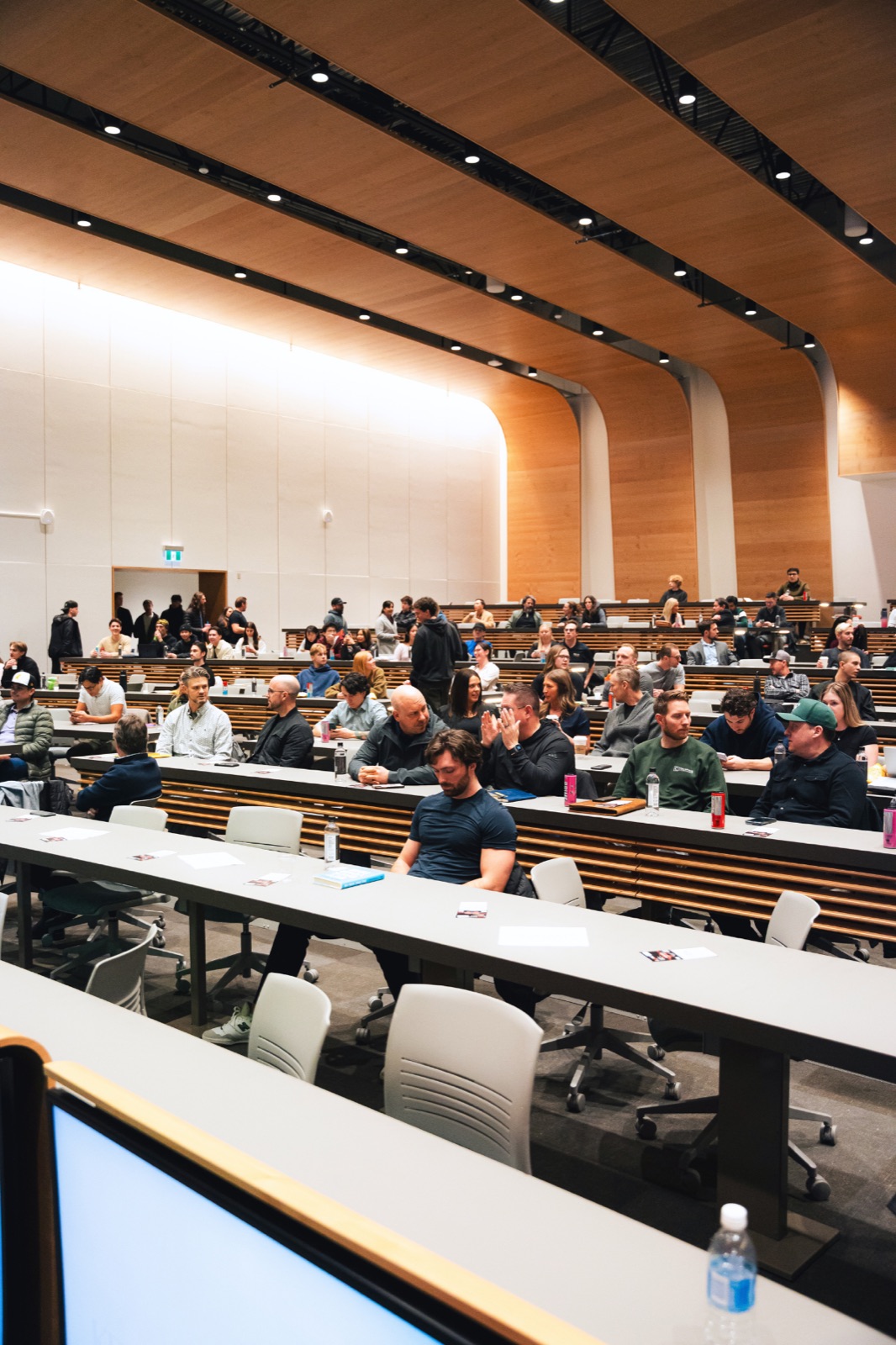
Quick Canadian housekeeping, because the top-ranking US guides won't tell you this. The Canada Digital Adoption Program (CDAP) is dead: closed to new applicants in 2024, wound down in 2025. Its practical replacement is the BDC LIFT program, launched April 24, 2026: $25K–$5M CAD in loans plus advisory (the AI stream requires $1M+ revenue). SR&ED tax credits (up to 35% refundable) still apply to genuinely experimental AI work. Locally, UBCO runs free AI workshops through the Okanagan Regional Library, and UBC offers an AI Skills Accelerator certificate. We regularly host AI-focused speakers too — check upcoming KFC events.
A 30-minute setup checklist to get started this week
Here's how to choose an AI tool for your business without a committee or a consultant:
- Minutes 0–10: Start free on all three. Create accounts on Claude, ChatGPT, and Gemini. Costs nothing, and you'll feel the personality differences within a few prompts.
- Minutes 10–12: Kill the training toggle. In each app's settings, turn off training/data-sharing. Do this before you paste anything real.
- Minutes 12–20: Test one real task. Not "write me a poem." Paste last month's quote, a supplier contract, or your month-end numbers and ask for a rework, a risk summary, or an anomaly check. The winner will be obvious.
- Minutes 20–25: Pick your paid tier. Hit a free limit doing real work? Upgrade the one you reached for first: $20/month for Plus or Pro, $14/user for Workspace Business Standard. Handling client or financial data? Go straight to ChatGPT Business ($25/user, 2-seat minimum) or Claude Team ($25/user, 5-seat minimum).
- Minutes 25–30: Connect one system. Wire up ChatGPT's connectors to Drive or Slack, or Claude's connector to QuickBooks or HubSpot, and run one workflow end to end.
The ROI bar is almost embarrassingly low: if a $20 plan saves you one hour a month, it's paid for itself. Most owners we know clear that in the first week.
Key takeaways
- It's a three-horse race in 2026: ChatGPT for breadth, Claude for writing/documents/agents, Gemini if you live in Google Workspace.
- All three cost about $20/month at the consumer tier — price is a tiebreaker, not a decider.
- Privacy is the real fork in the road: consumer plans train on your chats by default; ChatGPT Business and Claude Team contractually don't. Client data belongs on a business tier or nowhere.
- Claude for Small Business (May 2026) turned Claude into an ops tool: 15 agentic workflows plus QuickBooks, HubSpot, and Workspace connectors.
- Gemini has the most generous free tier; Claude's free tier writes best; ChatGPT's free tier runs out fastest.
- Only 39% of Canadian businesses under five employees use AI, so adopting now is a genuine competitive edge, not a catch-up move.
- CDAP is gone; BDC LIFT (loans + advisory) and SR&ED are the Canadian funding routes that still work in 2026.
Frequently asked questions
Is ChatGPT Plus worth it for a small business in 2026?
Yes, if you'd use it weekly or more. The free-vs-Plus quality gap is biggest on exactly the tasks owners care about (contracts, strategy, data analysis), and the free tier's ~10 messages per five hours won't survive a real workday. At $20/month, one saved hour covers it.
Which AI is safest for client data?
Business-tier plans or the API. ChatGPT Business and Claude Team/Enterprise contractually commit to not training on your data; the free and $20 consumer plans of all three vendors train by default unless you opt out.
What's the best free AI for small business?
Gemini has the most generous free tier (Gemini 3.5 Flash plus a Deep Research allowance). Claude's free tier produces the best writing. ChatGPT's free tier is the most limited. Start free on all three and upgrade the one you reach for.
Do I need more than one AI subscription?
Increasingly, yes. The 2026 norm (reportedly around 70% of small agencies) is a hybrid stack: the AI bundled with your workspace plus one standalone assistant. Solopreneurs typically land at US$50–200/month total.
Claude vs ChatGPT for business — which should I pick?
Pick Claude if your bottleneck is writing, long documents, contract review, or you want the small-business agent workflows and QuickBooks/HubSpot connectors. Pick ChatGPT if you want one broad assistant with the biggest ecosystem, 60+ connectors, and the cheapest compliant team plan (2-seat minimum vs Claude's 5).
Is there Canadian funding to help my business adopt AI?
CDAP ended in 2024, so ignore any guide still recommending it. The current routes are BDC's LIFT program (launched April 2026; $25K–$5M CAD in loans plus advisory, with a $1M+ revenue requirement on the AI stream) and SR&ED tax credits of up to 35% for genuinely experimental development work.
What are Kelowna businesses actually doing with AI?
More than you'd think: Sandhill Wines hosted a full-day hands-on AI event previewing RISE in BC, UBCO runs free AI workshops at the Okanagan Regional Library, and KFC members span trades using photo-to-quote, agencies drafting proposals in Claude, and e-commerce shops analyzing sales in ChatGPT.
Choosing the best AI for your small business comes down to one honest question: where do you lose the most hours? Pick the tool that attacks that, run the 30-minute checklist, and you'll be ahead of most Canadian businesses your size by Friday. To compare notes with people doing the same across the Okanagan, join the Kelowna Founders Club free. The next event is probably days away.
Kelowna Founders Club
Want the next play first?
Join free and get every guide, speaker insight, and event invite before anyone else. Built by founders in the Okanagan.
Join the club freeSee upcoming events