
Best AI Tools for Small Business in 2026 (And What to Skip)
The best AI for small business 2026: a hype-free shortlist by function, real Canadian costs from $0 to $500/month, what to skip, and a 30-day rollout plan.
If you're hunting for the best AI for small business 2026, most of what you'll find is a vendor listicle written by the company selling tool number one. This guide is different: a vendor-neutral shortlist organized by business function, with real prices, honest "skip it" calls, and a 30-day plan to actually get value. It's written for Canadian owners, including the wineries, trades, agencies, and startups we see every month around Kelowna and the Okanagan.
How to Think About AI in a Small Business (Leverage, Not Magic)
Start with the numbers, because they cut both ways. Per Statistics Canada's Q2 2026 survey, only 19.2% of Canadian businesses used AI to produce goods or deliver services in the past year, yet StatCan's productivity research finds AI-using firms generate roughly 24% higher sales per employee after controlling for industry and location. Meanwhile in the US, the SBE Council's 2026 Small Business Tech Use Survey found 82% of small employers have already invested in AI, running a median stack of about five tools.
Translation: adoption is a genuine edge in Canada, and it's biggest where adoption is lowest. Construction sits at 9.2% AI adoption nationally and agriculture at 4.5%, which means a Kelowna trades business or Okanagan winery adopting even basic AI is playing against nearly empty competition. Rural adoption (9.9%) lags urban (21.0%) too.
One rule before you spend a dollar: start with a measurable business problem, not a tool. AI pays off on repetitive, high-frequency, rules-based tasks — quoting, follow-up emails, receipt entry, FAQ answers. It wastes money when bolted onto a process that already works fine. If you can't name the hours a tool will save, don't buy it yet. (If you're still at the idea stage, read our guide on how to start a business in Kelowna first; AI is an accelerant, not a foundation.)
The Best AI for Small Business in 2026: One Assistant, One Automation Layer, One Specialist
Forget the 18-tool roundups. The stack that works for most owners is three pieces.
1. One general assistant — US$20/month
Claude Pro and ChatGPT Plus are both US$20/month, and either one replaces a shelf of single-purpose "AI writer" subscriptions. On the ChatGPT vs Claude for business question: Claude is favoured for long-document analysis and writing (contracts, proposals, reports), and its Pro plan includes Claude Code, a genuine coding agent. ChatGPT wins on breadth, image generation, and browsing. Pick by your dominant use case; you can't go far wrong either way.
Two upgrade notes:
- Team tiers (~US$25–30/user/month) buy admin controls and no-training-on-your-data defaults, worth it once employees use it with business information. They do not buy a smarter model.
- The US$200/month Max/Pro tiers are overkill for most small businesses. Skip until you're hitting limits daily.
2. One automation layer
This is what turns "I chat with AI sometimes" into AI automation for small business that runs while you sleep.
- Zapier — from ~US$19.99/month annual (750 tasks), 7,000+ app integrations, plus Zapier Agents and a natural-language Copilot. Fastest path for non-technical founders.
- Make — cheaper per-operation; the middle ground.
- n8n — open-source and self-hostable for ~US$20/month in server costs. Its 2.0 release added an AI Agent Tool Node and 70+ AI nodes, and per-execution billing can cut costs 80–90% versus per-task pricing on long workflows. It's also the only option where your data stays on your own servers.
Start with Zapier unless you're technical or privacy-sensitive; graduate to n8n when task bills climb.
3. One specialist tool
Pick exactly one, matched to your biggest bottleneck: bookkeeping, customer support, or content/video. The sections below cover each. Resist buying all three in week one; subscription sprawl is the number-one way owners torch money on AI.

AI for Marketing and Content: What Actually Moves Revenue
Here's the honest call on AI for marketing a small business: don't pay for a dedicated AI writing tool. Your $20 assistant already drafts blog posts, emails, ad copy, and social captions. The tools worth paying for do something the assistant can't: design, video, and distribution.
- Canva Pro — US$15/month. 500 AI credits and the full Magic Studio suite, from background removal to text-to-video, plus 2026's conversational Canva AI 2.0 editor. The free tier already includes Magic Write and a limited background remover, so start free.
- OpusClip. Turns one long video into a dozen captioned, engagement-ranked vertical clips. If you film one talk or podcast a week, this is the highest-leverage marketing subscription you can buy.
- HeyGen — from US$29/month. AI avatar video for explainers and personalized outreach when you don't want to be on camera.
- Jasper. Only worth it for teams producing brand-voice marketing copy at real scale; solopreneurs should skip it.
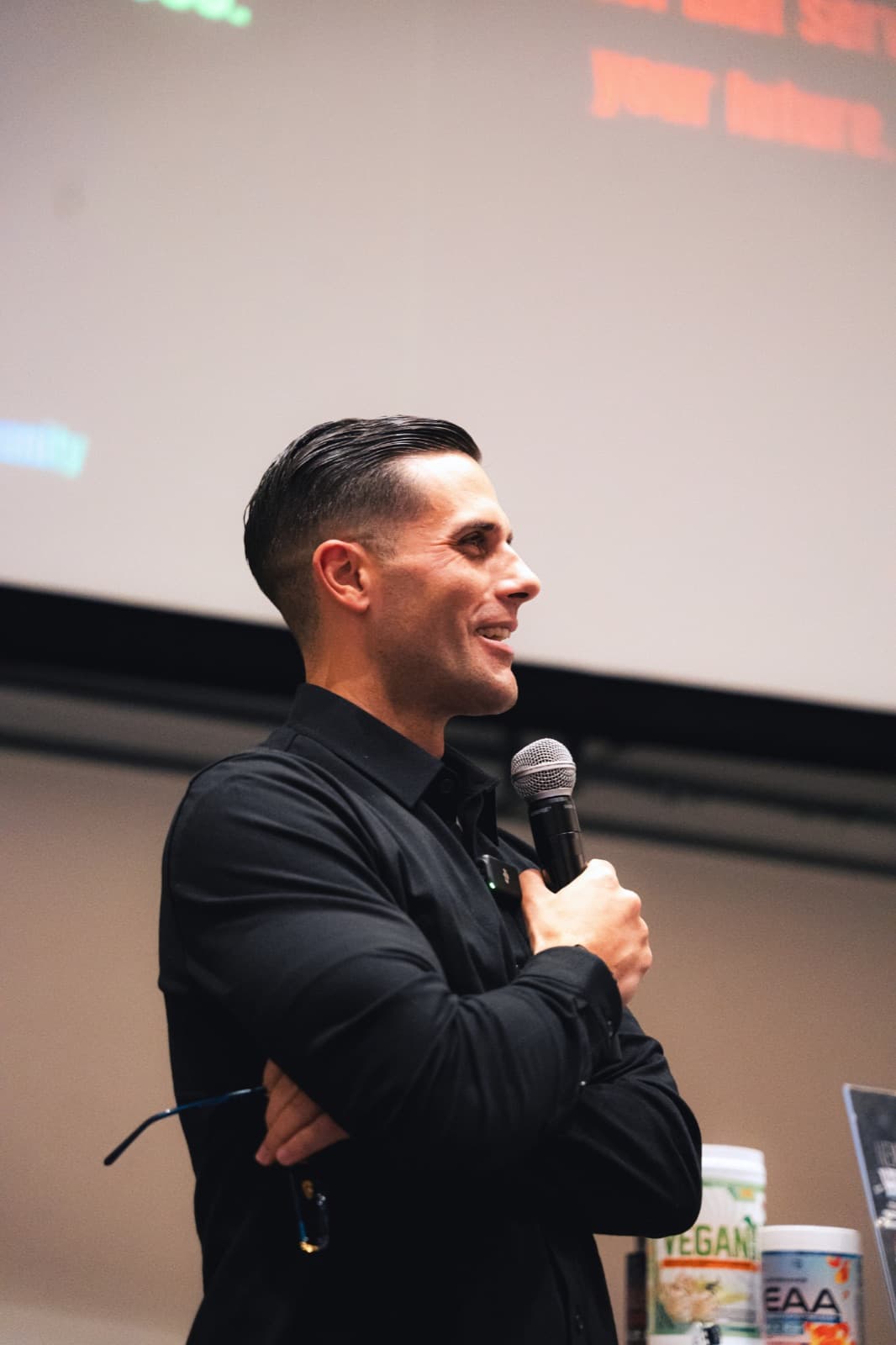
The workflow that wins matches what we've heard repeatedly from Kelowna Founders Club speakers, including a content creator with 8.8 million followers and a professional sales copywriter: AI drafts, a human voice edits, and volume plus repurposing beats polish. Record one genuine piece of content weekly, then let OpusClip and Canva multiply it. Google now actively rewards experience and originality, so never publish raw AI output under your name.
AI for Admin: Bookkeeping, Email, Scheduling, and Customer Service
Admin is where AI tools for solopreneurs quietly pay for themselves, because these are the classic repetitive, rules-based tasks.
Bookkeeping. QuickBooks Online Canada now ships Intuit Assist AI as standard: 30/60/90-day cash-flow prediction, automatic expense categorization, invoice matching, and anomaly flagging with human review. Canadian pricing is CAD $20/month (Simple Start), $35 (Essentials), $50 (Plus). Pair it with Dext for receipt and invoice scanning and your shoebox of receipts disappears. These AI bookkeeping tools don't replace your accountant; they make their hours cheaper. (Your books also depend on structure; see sole proprietorship vs incorporation in Canada.)
Meetings. Fathom records and transcribes unlimited meetings free (advanced AI summaries capped at 5/month on the free plan). Fireflies runs US$0–39/user/month. Start free; most owners never need to pay.
Scheduling. Motion (US$19/month Pro) aggressively auto-reschedules your calendar around priorities; Reclaim (US$10–18/month) does gentler focus-time blocking. Nice-to-haves, not must-haves.
Customer service. For an AI chatbot for small business, Tidio is the best small-business value: plans at US$29–79/month plus the Lyro AI add-on from US$39/month (50 conversations) to $289 (500), resolving roughly 55–65% of enquiries automatically. Two traps to know:
- Tidio's pricing cliff — after the standard plans, the next tier is Plus at US$749/month with nothing in between.
- Intercom Fin's per-resolution pricing — US$0.99 per resolution plus seats from $29 sounds cheap, but at 1,000 resolutions and 5 agents it balloons to roughly $6,090/month. Skip unless your support volume is genuinely large. Flat-fee bots like Crisp or FastBots keep small-business AI customer service budgets predictable.
Vibe Coding and No-Code AI: Building Internal Tools Without Developers
Vibe coding — describing the app you want in plain English and letting AI build it — is the most underrated 2026 development for owners. Two categories exist: prompt-to-app builders (no code needed) and AI code editors (developer skills required).
- Lovable — fastest from concept to revenue: full-stack generation, GitHub sync, Stripe built in, and it exports portable code so you're not locked in.
- Bolt.new — generous free tier (300K tokens/day); Pro at US$25/month.
- Replit — Core at US$20/month annual including $25 of credits; the best pick for internal dashboards and tools, entirely in the browser.
- Claude Code — included in the $20 Claude Pro subscription; a real coding agent, but it wants some technical comfort.
This is already happening locally: RationalGo markets an AI app builder to Okanagan wineries — tour-booking apps with CAD payments and automatic BC GST/PST calculation, built by prompt in minutes instead of paying a Kelowna agency thousands. With 93% of wineries experimenting with or researching AI, the wine industry is further ahead than most people assume.
The honest caveat: vibe-coded tools are great for internal use. Anything customer-facing that touches payments or personal data needs a proper security review before launch.

What the Best AI Tools for Small Business Cost in 2026: $0 to $500/Month
Realistic budgets, not vendor fantasy. Note that most SaaS prices are USD; Canadians pay roughly 35% more in CAD, so budget accordingly.
| Tier | Monthly cost (USD) | What you run |
|---|---|---|
| Starter | $0 | ChatGPT/Claude/Gemini free tiers + Canva free + Fathom free |
| Foundation | ~$30–50 | One $20 assistant + Zapier starter or Canva Pro |
| Growth | ~$200–500 | Assistant + automation + QuickBooks + chatbot + video tool |
The free AI tools for business tier is a legitimate strategy, not a compromise: stack the free tiers and use different assistants for different jobs. Upgrade only when you hit a wall.
Two hidden costs the listicles never mention:
- Setup time: budget 20–30 hours of internal setup per major tool, plus 5–10 hours/month ongoing.
- Waste: within 60 days, the average AI-curious owner is paying $300–400/month for tools they barely use, using under 30% of what they pay for. A monthly cancel-audit (see the 30-day plan) prevents this.
If you're in the Okanagan, check Accelerate Okanagan's Level Up Local tech-adoption grants, which help local businesses fund exactly these tools. The regional tech sector is already a $1.67B, 12,500-job economy, and events like Sandhill Wines' AI Week in Kelowna show how mainstream this has become for local entrepreneurs.
Where AI Fails Small Businesses (and How to Avoid the Traps)
Is AI worth it for small business? Yes, but these six traps cause most of the failures:
- Tool-first instead of problem-first. The single biggest failure mode. Name the bottleneck before you open your wallet.
- Bad data. Poor data quality drives roughly half of AI project failures. Clean your contact list before automating outreach to it.
- Subscription sprawl. The median business runs ~5 AI tools; much of that $300–400/month goes unused.
- Privacy leaks. Sensitive data now makes up 34.8% of employee ChatGPT inputs, up from 11% in 2023. Write a one-line AI policy today: no client PII or proprietary data in consumer AI tools, and name your approved tools. In Canada, PIPEDA applies to how you handle customer data; this isn't optional. (CFIB publishes 2026 research on AI adoption and training in Canadian SMEs if you want to benchmark.)
- Per-resolution pricing surprises. Run the Intercom-style math at 3x your current support volume before signing.
- Publishing raw AI content. AI drafts, human edits — always.
A 30-Day Plan to Get AI Working in Your Business
Here's how to use AI in a small business without the flailing, one month and one tool at a time:
- Week 1 — Pick the problem, get the assistant. Choose one measurable bottleneck (e.g., "quotes take 3 hours each"). Subscribe to Claude Pro or ChatGPT Plus (US$20). Write your one-line AI policy and share it with your team.
- Week 2 — Automate one workflow. Connect Zapier or Make to move data you currently copy-paste: new lead → CRM → follow-up draft is the classic first win.
- Week 3 — Add one specialist. Match it to your Week 1 bottleneck: QuickBooks with Intuit Assist for books, Tidio for support, OpusClip or Canva Pro for content.
- Week 4 — Measure and cut. Count hours actually saved. Cancel anything you haven't opened twice. Whatever survives, write a one-page playbook so an employee can run it.
Then repeat with the next bottleneck. That's how small businesses use AI in Canada profitably: one proven workflow at a time, not ten tools at once. And if you're formalizing as you grow, our guide to how to register a business in BC walks through the paperwork side.
Key takeaways
- Only 19.2% of Canadian businesses use AI, and AI-using firms show ~24% higher sales per employee. The edge is real, especially for Okanagan trades and agriculture where adoption is lowest.
- The winning stack is three pieces: one $20 assistant, one automation layer, one specialist tool, not eighteen subscriptions.
- Skip dedicated AI writers; pay for what the assistant can't do (video, design, distribution, bookkeeping).
- Budget tiers that work: $0 to start, $30–50 foundation, $200–500 growth (all USD, so add roughly 35% in CAD).
- Watch the traps: pricing cliffs (Tidio Plus), per-resolution billing (Intercom Fin), and $300–400/month in unused subscriptions.
- Write a one-line AI policy: no client data in consumer AI tools. PIPEDA applies.
- Roll out in 30 days: problem → assistant → one automation → one specialist → measure and cancel.
Frequently asked questions
Is AI worth it for a small business?
Yes, if you point it at repetitive, high-frequency tasks like quoting, bookkeeping, and follow-ups. Statistics Canada finds AI-using firms generate about 24% higher sales per employee. It's not worth it when bolted onto processes that already work fine.
ChatGPT or Claude for business — which one should I pick?
Both are US$20/month, and both are excellent. Choose Claude for long-document analysis, writing, and coding (Claude Code is included); choose ChatGPT for breadth, image generation, and browsing. Many owners stack both free tiers before committing.
How much should a small business spend on AI per month?
Start at $0–50: free tiers plus one $20 assistant. A growth-stage business running assistant, automation, bookkeeping, a chatbot, and a video tool lands around US$200–500/month. Audit monthly and cancel anything unused.
Do I need an AI policy for my small business?
Yes, and it can be one line: no client PII or proprietary data in consumer AI tools, plus a named list of approved tools. Sensitive data is now over a third of employee chatbot inputs, and PIPEDA governs customer data in Canada.
Can AI replace an employee?
Treat AI as augmentation first — it makes your existing people faster at repetitive work. Fully replacing roles is risky operationally, and AI used in hiring decisions is increasingly regulated.
What are the best free AI tools for business?
ChatGPT, Claude, and Gemini free tiers for drafting and analysis; Canva free for design; Fathom for unlimited free meeting recordings and transcription. Stacking free tiers is a legitimate starting strategy for solopreneurs.
Are there grants for AI adoption in the Okanagan?
Yes. Accelerate Okanagan's Level Up Local tech-adoption grants help Kelowna-area businesses fund tools like the ones in this guide. CFIB also publishes current research on AI adoption support for Canadian SMEs.
The fastest way to figure out which of these tools actually works is to ask someone in the room who's already running it — and in Kelowna, that room exists. Come to one of our monthly events, compare stacks with founders who've made the mistakes already, and join the Kelowna Founders Club free. It costs less than any tool on this list: nothing.
Kelowna Founders Club
Want the next play first?
Join free and get every guide, speaker insight, and event invite before anyone else. Built by founders in the Okanagan.
Join the club freeSee upcoming events