
Bootstrapping vs Venture Capital: A Founder's Framework
An honest bootstrapping vs venture capital framework: worked dilution math, Canadian middle paths, and why Kelowna is one of the best places to bootstrap.
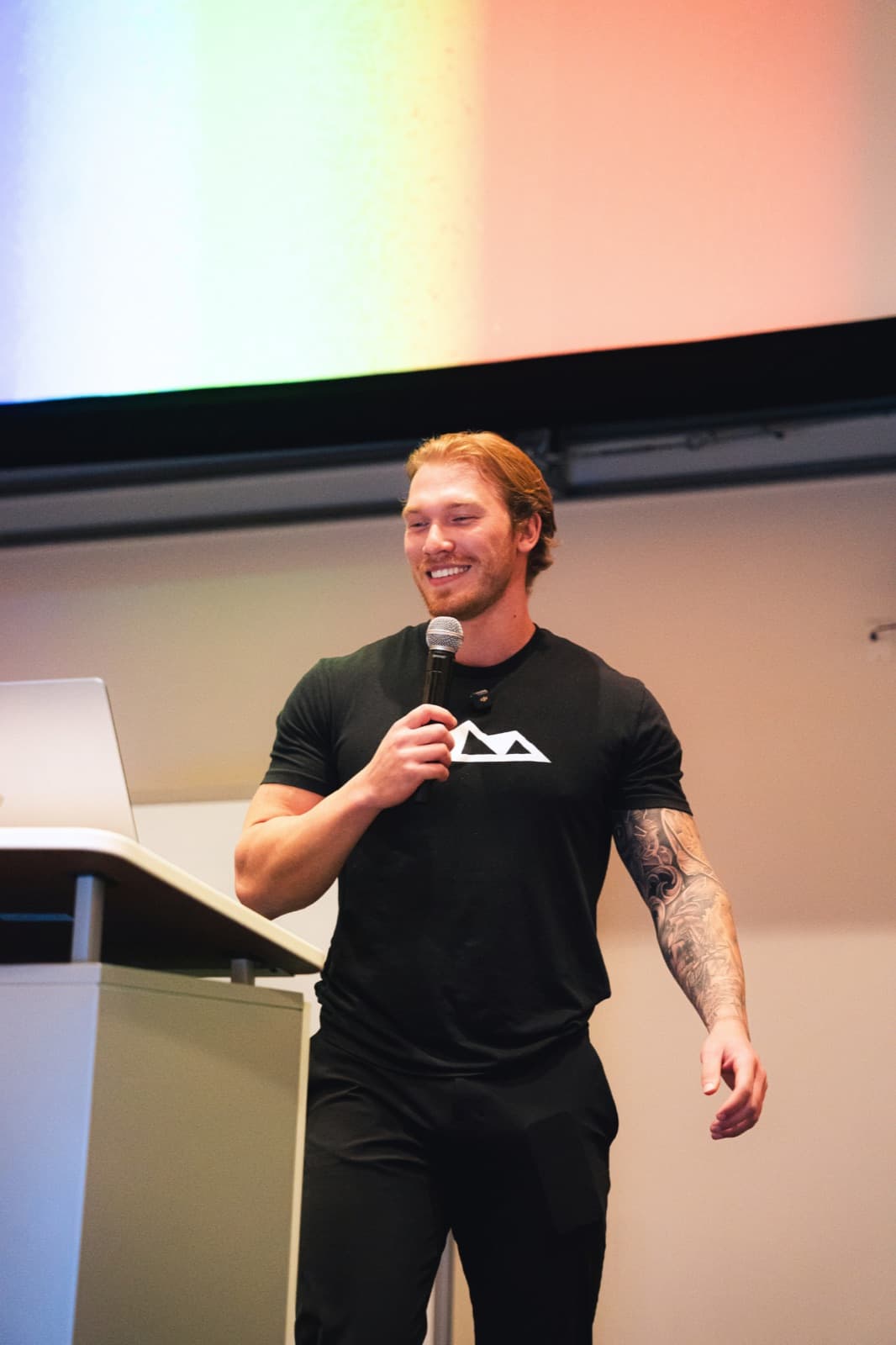
Every founder eventually hits the same fork in the road: fund the business yourself or sell a piece of it to investors. The bootstrapping vs venture capital debate is usually argued like a religion, but in 2026 it's really just math plus an honest answer about what you're building. Here's the framework we walk founders through in Kelowna, with the dilution numbers, the Canadian middle paths, and the local reality that most comparison articles skip entirely.
Bootstrapping vs Venture Capital: The Real Question
Before you think about term sheets, answer this: what kind of business are you actually building?
Bootstrapping is the default, not the exception. Roughly 77% of founders fund their start with personal savings, and only a tiny fraction (commonly cited as well under 1%) ever raise venture capital. If you're bootstrapping a business, you're not doing the scrappy fallback option. You're doing what almost everyone does.
Venture capital fits a narrow profile: a market with winner-take-all dynamics, revenue potential north of $100M, and a total addressable market around $10B or more, reachable within a fund's timeframe. If that's not your business, VC isn't a harder path. It's the wrong tool.
The sharpest test we know: does capital accelerate a working model, or would it just finance exploration?
- If growth still depends on your personal network and opportunistic deals, more money won't fix that. Bootstrap.
- If your acquisition channels are tested and respond predictably to incremental spend — every dollar in reliably produces more dollars out — the case for raising gets real.
This is also where the "lifestyle business vs startup" framing falls apart. A business doing $5M a year at healthy margins isn't a consolation prize — it only looks like failure through a VC's lens.
What Bootstrapping Demands: Cash Flow Discipline and Slower Bets
Bootstrapping means revenue is your only oxygen. Walk in knowing the constraints.
The core discipline is Paul Graham's default alive vs default dead test: at your current expenses and current revenue growth rate, do you reach profitability before the cash runs out? Ask it from about eight or nine months in (read the original essay). The deciding variable is growth rate, not burn: at the same spend, 10% monthly growth may carry you to profitability while 3% never does.
What bootstrapping demands in practice:
- Charge from day one. No "we'll monetize later." Revenue is your funding round.
- Run the default-alive calculation monthly. If you're default dead, you change something now — not at month eleven.
- Make slower, smaller bets. You can't hire ahead of revenue or outspend a funded competitor on ads. You win on focus and retention instead.
- Keep personal burn low. Your salary is part of the company's runway.
The ceiling is higher than people think. Mailchimp bootstrapped for 20 years to roughly $800M in revenue before its $12B sale to Intuit in 2021, the largest bootstrapped exit ever. Atlassian started in 2002 with $10K on a credit card; its founders held over 70% at IPO. Zoho runs at $1.4B in annual revenue with zero external funding. A profitable startup without funding is a repeatable pattern, not a unicorn story.
Is it slower? Somewhat: commonly cited figures suggest top-quartile bootstrapped SaaS companies reach $1M ARR only about four months behind VC-backed peers.
What Raising Costs You: Dilution, Control, and the Growth Treadmill
The pros and cons of venture capital usually get listed as bullet points. Let's talk about what the cons actually cost.
Dilution, explained with real medians. Carta data across 2,005 US software startups puts median dilution at roughly 19.5% at seed, 18% at Series A, 14% at Series B, and 10% at Series C (EquityList has the full breakdown). Stack those and the median founding team holds about 56% after seed, 36% after Series A, and 23% after Series B. Founder-CEOs typically hold 8–10% at IPO.
The growth treadmill is structural. VC returns follow a power law: in a typical 10-company portfolio, around six fail, two or three return capital, and one or two must return the entire fund. That's why VCs need 100x potential from every investment (angels are happy with 10x). Your healthy $5M/year business is a portfolio failure to your investor, and they will push you to swing bigger, hire faster, and raise again.
Liquidation preferences can zero you out. The market standard is a 1x non-participating preference (85%+ of seed and Series A deals). But watch the exceptions: a company that raises $10M with a 2x preference and sells for $20M hands all $20M to investors: the founders get $0. Read your term sheet like your outcome depends on it, because it does.
And the 2026 Canadian reality: VC is concentrating into fewer, bigger deals — CAD $8.0B across 571 deals in 2025 (deal count down 12%), only 29 VC-backed exits, and angel investing at a five-year low of CAD $113.8M. Meanwhile, AI tooling, no-code, and lean teams have made building cheaper than ever. Capital is tighter exactly when you need less of it.
Bootstrapping vs Venture Capital: The Math on Ownership Outcomes
Should you raise money for your startup? Run your own numbers through this worked example.
The bootstrapped path. You grow on revenue, grant a small option pool, and sell for $10M owning 90%. Founders take home roughly $9M pre-tax.
The venture path. You raise a seed, Series A, and Series B at the Carta medians above. The founding team now holds about 23%. To match the bootstrapper's $9M, you need an exit around $40M, before any liquidation preferences are paid out. Same personal outcome, four times the exit, with a board and a growth mandate attached.
| Path | Founder ownership at exit | Exit needed for ~$9M to founders |
|---|---|---|
| Bootstrapped (small ESOP) | ~90% | ~$10M |
| Seed + A + B at medians | ~23% | ~$40M+ |
| Late-stage venture (multiple rounds) | ~15% | ~$60M+ |
For context, bootstrapped founders retain a median of about 65% equity, versus around 15% after late venture rounds.
Now the honest other side: at a $250M+ exit, the venture path wins decisively. Raising is a bet that your outcome lands in the far-right tail, and that you couldn't have reached it without the fuel. Sometimes that bet is correct. Just make it consciously.
The Middle Paths: Angels-Only, Revenue-Based Financing, and Loans
The bootstrapping vs raising money question isn't binary, and this is where Canadian (and specifically BC) founders have an unusually strong hand. If you want the full landscape, see our guide to getting startup funding in Canada.
Angels-only. The average Canadian angel deal is around $232K CAD (NACO, 2025 data): enough to matter, small enough to keep your cap table clean. BC founders should register as an Eligible Business Corporation (EBC) so local investors get BC's 30% tax credit (up to a $300K credit per investor under BC Budget 2025). It's one of the most concrete reasons an Okanagan angel says yes instead of maybe.
Revenue-based financing. Toronto's Clearco has deployed over $3B: a fixed fee of roughly 6–12.5%, repaid as a percentage of sales. You'll typically need $10K+/month in revenue and six months of history; caps across the revenue-based financing industry run 1.3x–3x. Non-dilutive, fast, and repayment scales with your sales.
Loans — non-dilutive, and not grants:
- Futurpreneur: up to $75K combined for founders aged 18–39, with two years of mentorship attached. It's a loan, not a grant.
- BDC: Start-up Financing up to $250K and Small Business Loans up to $350K, typically priced around prime + 2–6%.
- CSBFP: up to $1.15M, 85% government-guaranteed, through your bank.
- Community Futures Central Okanagan: up to $150K for local businesses (call 250-868-2132).
Non-dilutive R&D money is the quiet superpower. Post-Bill C-15, SR&ED offers up to $2.1M per year in refundable federal credits, plus BC's extra 10%, and it stacks with IRAP ($75K–$200K is typical). A Kelowna SaaS doing genuine R&D can recover roughly 45–64% of eligible R&D payroll without selling a single share. Our SR&ED tax credit guide walks through eligibility, and there's more free money catalogued in our small business grants guide. Regionally, PacifiCan's Business Scale-up Program offers interest-free repayable funding up to $5M — Kelowna's MAKR Group landed $2.5M from it in January 2026.
The smart hybrid: bootstrap to prove the model, stack non-dilutive sources, then raise selectively once your data is compelling. You'll get a better valuation and give up far less.
When to Raise Venture Capital (and When You Absolutely Shouldn't)
Signals you should raise:
- Speed decides the winner. You're in a genuine winner-take-all market and second place is worth little.
- Your channels are proven. You can turn $1 of spend into $3+ of revenue, predictably, and capital directly buys growth.
- The product is capital-intensive. Hardware, deep tech, regulated markets: revenue physically can't fund the build.
- You have consistent revenue and product-market fit at the stage you're raising for.
Signals you shouldn't:
- You're raising to find product-market fit. That's financing exploration, and it's how founders end up default dead with a board.
- Your business is great at $2–10M/year but not $100M+. Take the great business.
- You'd be default alive without it. Raising from strength is fine; raising out of habit is not.
- You want optionality over exit timing, pace, and how you spend your week. Investors buy a say in all three.
Bootstrapping Outside a Major Hub: The Kelowna Advantage
Here's the local argument: raising money in a small market is harder, but bootstrapping in one is easier, and the Okanagan is proof.
Start with the anchor story. Club Penguin was founded in Kelowna in 2005 by Lance Priebe, David Krysko, and Lane Merrifield, fully bootstrapped, and repeatedly turned down venture capital. Two years later it sold to Disney for US$350M, plus up to another US$350M in earnouts — split among the founders, not a cap table. Bananatag grew in Kelowna from 2013 without traditional VC rounds and merged with Staffbase in 2021; the combined company is now a global leader with 450 employees across 11 offices. (For honesty's sake, VC does happen here: FreshGrade raised $4.3M from Accel and Social Capital.)
Now the burn-rate math. Kelowna is roughly 21% cheaper than Vancouver overall, with a central one-bedroom renting around $1,413 versus $1,981 CAD (2026 figures). When your personal costs are the company's biggest expense (and pre-revenue, they usually are), the same savings or seed cheque buys meaningfully more runway months here than in Toronto or Vancouver. Lower burn means you hit default alive sooner, and may never need the round at all. If you want to bootstrap a SaaS in Canada, it's hard to beat the Okanagan's cost-to-quality-of-life ratio.
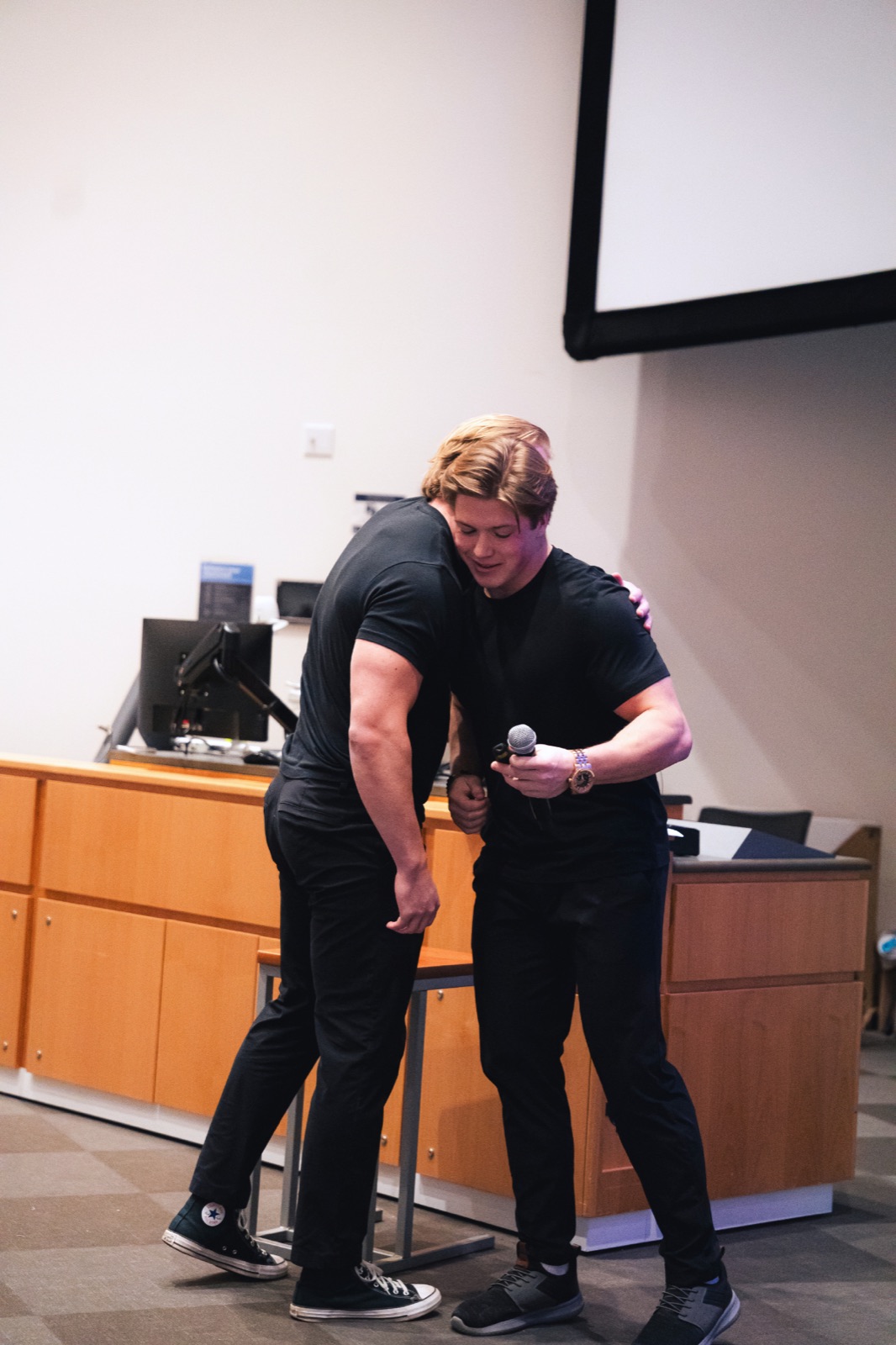
And you won't be doing it alone: the region has 787 tech companies generating $4.98B in economic impact, plus Accelerate Okanagan, the OKGN Angel Summit, Valhalla Angels Kelowna, and e@UBCO when you do want capital or mentorship. You'll meet founders from most of them at our events.
Making the Call: A Decision Checklist You Can Use This Week
Sit down with your co-founder (or a coffee and a spreadsheet) and answer these six honestly:
- Is your TAM $10B+ with winner-take-all dynamics? If no, stop — the VC question answers itself.
- Are you default alive today? Run Paul Graham's test with real numbers.
- Can $1 of spend predictably return $3? If you can't show it with data, you'd be raising to explore, not accelerate.
- Would you be happy owning ~20% of this in six years, with a board? Picture it specifically. Many founders wouldn't be.
- Have you exhausted non-dilutive stacking? SR&ED + IRAP + BDC + EBC-credit angels can fund a lot of company before you touch institutional dilution.
- Does your personal goal need a $250M outcome — or does a $5M one change your life? Fund the goal you actually have.
If you answered "no" to 1 or 3, bootstrap. If you answered "yes" to all of 1, 2, and 3 and made peace with 4, go raise, deliberately and from strength.
Key takeaways
- Bootstrapping is the norm: ~77% of founders start on savings; well under 1% ever raise VC.
- The test isn't ambition, it's mechanics: raise only when capital accelerates a proven model, never to finance exploration.
- Dilution compounds fast: at Carta medians, founding teams hold ~23% after Series B, so a venture-backed founder needs a ~$40M exit to match a bootstrapper's $10M one.
- VC's power law makes the growth treadmill structural: a healthy $5M/year business is a failure inside a fund's portfolio math.
- Canada is unusually bootstrap-friendly: SR&ED (up to $2.1M/yr refundable), IRAP, BDC, CSBFP, and BC's 30% EBC angel tax credit stack without dilution.
- Kelowna's ~21% cost advantage over Vancouver directly extends runway: Club Penguin bootstrapped here to a US$350M Disney exit.
- The strongest hybrid: bootstrap to prove it, stack non-dilutive funding, raise later only if the data demands it.
Frequently asked questions
Is bootstrapping better than VC funding?
Neither is "better" — they optimize for different outcomes. Bootstrapping maximizes ownership, control, and optionality; venture capital maximizes speed and scale where speed decides the winner. The right answer follows from your market's dynamics and your goal.
What percentage of startups are bootstrapped?
Most surveys land near 77% of founders funding their start with personal savings, while well under 1% ever raise venture capital. Statistically, bootstrapping a business is the default path rather than the exception.
How much equity do founders lose per funding round?
Carta's medians across US software startups: about 19.5% dilution at seed, 18% at Series A, 14% at Series B, and 10% at Series C. The median founding team holds roughly 56% after seed, 36% after Series A, and 23% after Series B.
Can you bootstrap a SaaS in Canada?
Yes — and Canada is arguably one of the best places to do it. SR&ED refunds up to $2.1M per year federally (plus BC's extra 10%) mean a SaaS doing real R&D can recover a large share of its engineering payroll without selling equity, and programs like IRAP and BDC stack on top.
What is "default alive vs default dead"?
It's Paul Graham's test: at constant expenses and your current revenue growth rate, do you reach profitability before cash runs out? Default alive means raising is optional; default dead means something must change now. Run it monthly from about eight months in.
What are the best alternatives to venture capital in Canada?
Angels-only rounds (average Canadian deal ~$232K, sweetened in BC by the 30% EBC tax credit), revenue-based financing like Clearco, loans from Futurpreneur, BDC, and the CSBFP, and non-dilutive R&D funding through SR&ED and IRAP. Most strong bootstrappers stack several.
Why is Kelowna good for bootstrapping a startup?
Lower burn: Kelowna runs about 21% cheaper than Vancouver, so the same revenue buys more runway. Add a real ecosystem (787 tech companies, Accelerate Okanagan, Valhalla Angels) and Club Penguin's bootstrapped US$350M exit as precedent, and the small-market disadvantage flips into an advantage.
Whichever path you choose, you'll choose better alongside people who've made the call themselves. Join the Kelowna Founders Club free and pressure-test your decision with founders who've lived both sides of it.
Kelowna Founders Club
Want the next play first?
Join free and get every guide, speaker insight, and event invite before anyone else. Built by founders in the Okanagan.
Join the club freeSee upcoming events