
How to Build a SaaS MVP With AI (Solo, in Weeks)
Learn how to build a SaaS MVP with AI in 3–4 weeks as a solo founder — validation, build stack, pricing, your first 10 customers, and Okanagan channels.
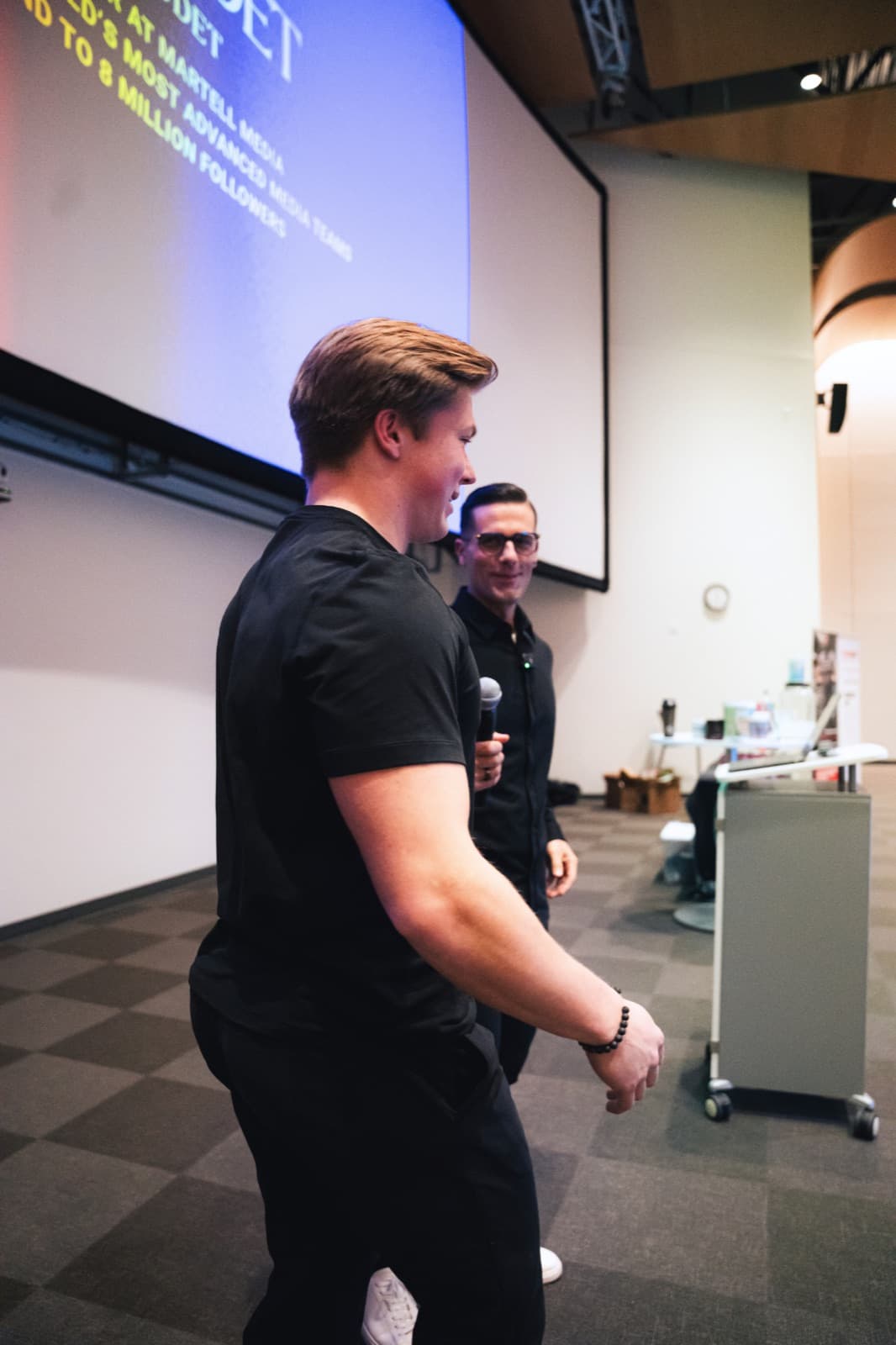
It has never been cheaper to ship software, and it has never been easier to ship software nobody wants. This guide covers how to build a SaaS MVP with AI as a solo founder, start to finish, in weeks, on a budget under $100/month. It includes the parts most guides skip: pricing it, landing your first 10 paying customers, and knowing when to kill it. It's written from Kelowna, but the playbook works anywhere.
Before you build a SaaS MVP with AI: validate the problem
The biggest failure mode in 2026 isn't bad code. AI made building so easy that founders skip validation entirely and spend a weekend crafting a beautiful app for a problem nobody has. Validate before you build. The sequence looks like this:
- Name a painful problem. Not "interesting," painful. Something people already pay to solve badly.
- Define a narrow target audience. "Realtors in BC who lose leads after open houses" beats "small businesses."
- Scan competitors. If nobody else exists, ask why. If ten exist, find the underserved wedge.
- Put up a landing page with a commitment-based CTA — "Pre-Order 50% Off," not "Learn More."
- Attempt pre-sales. Charging money before the product exists is the gold standard of SaaS idea validation.
The numbers to hold yourself to: a healthy smoke-test landing page converts 5–10% of visitors on the CTA click; below 2% means your value prop or problem hypothesis is broken. On pre-sales, expect 1–3% of a genuine waitlist to actually pay. Proof of interest is cheap. Proof of wallet is the real signal.
Pair that with 10 customer interviews in your first two weeks. Here's Kelowna's unfair advantage: the Okanagan has roughly 787 tech companies and 32,000+ tech workers: dense enough to find real B2B interview targets, small enough that ten coffee meetings gives you meaningful market coverage. Work the room at KFC events, Startup Grind Kelowna, the Okanagan Entrepreneur & Startups and Digital Okanagan meetups (which pull devs and creatives from Vernon to Penticton), the Okanagan Tech Facebook network, and Accelerate Okanagan's events calendar. In a market this size, you can validate in two weeks what takes Toronto founders two months of cold email.
If you want structured help, Accelerate Okanagan runs a Venture Validation Program aimed at exactly this stage, with co-investment of up to $45K CAD available through its Delta program for companies that graduate into growth.
Scope ruthlessly: the one-feature MVP rule
Your first release should complete one end-to-end workflow tied to the core problem. A scheduling tool must let someone book and confirm a meeting. An invoicing tool must send an invoice and record payment. Half a workflow is a demo, not a product.
Your SaaS MVP checklist for version one is three items:
- Auth — people can sign up and log in
- The core workflow — the one job, done end to end
- Essential output — the result the user came for (the booking, the report, the export)
That's the value loop. Everything else — settings pages, teams, dark mode, integrations — waits. And speed matters inside the product too: if sign-up-to-value takes more than about 30 seconds, you've lost the user.
The founders who write the best prompts now build the best products. The bottleneck has shifted from technical skill to problem definition. Interviews aren't a box to tick; they're where your prompts come from. The 90-day framing that works: 10 interviews, then exactly 3 MVP features, then build.
Build week: how to build a SaaS MVP with AI, day by day
Realistic timelines first, because "weekend MVP" headlines set you up to quit. As of mid-2026, a simple SaaS with AI tools takes 3–4 weeks; complex products run 6–12 weeks. The same build with an agency team is 4–6 months and $15K–$80K. That delta is the whole reason solo founder SaaS is viable now.
The tools, with mid-2026 pricing:
| Tool | Price (USD, as of mid-2026) | Best for |
|---|---|---|
| Lovable | $20/mo | Fastest full-app prototype from a prompt |
| Bolt | Free tier; Pro $25/mo | Prototyping full-stack apps in the browser |
| v0 (Vercel) | Free tier available | Best-in-class React/Tailwind UI, but no backend, database, or auth |
| Claude Code | Via Claude Pro, $20/mo | AI pair-programmer in your terminal for the real build |
| Cursor | $20/mo | AI-native code editor for iterating on production code |
The pattern that works: prototype in Lovable or Bolt, then rebuild the keeper in Cursor or Claude Code once you know what you're building. If you're new to this workflow, read our guides on what vibe coding actually is and Claude Code vs Cursor before you pick a lane.
A 30-day plan if you want to launch a SaaS in 30 days:
- Days 1–3: Validate — landing page live, interviews booked, pre-sale offer out.
- Days 4–8: Design and prototype the core flows with an AI SaaS builder like Lovable.
- Days 9–20: Build the core features properly in Cursor or Claude Code.
- Days 21–25: Wire up payments.
- Days 26–30: Launch assets (AI-drafted landing copy and social posts), then ship to Product Hunt, Indie Hackers, and LinkedIn.
One caveat that competitors gloss over: treat AI-generated code as a first draft. Roughly 45% of AI-generated code fails security tests, and 65% of scanned vibe-coded apps had security issues — plus AI models sometimes hallucinate package names that attackers then register ("slopsquatting"). You saved weeks of build time; reinvest a day of it in a security pass. Check auth on every route, validate every input, and verify each dependency actually exists before installing it.
Payments, auth, and hosting without a developer
This is where MVP advice for non-technical founders usually gets hand-wavy. Concretely:
- Database + auth + storage: Supabase. The free tier gives you a 500MB Postgres database, auth for 50K monthly active users, and 5GB egress, but note it auto-pauses after a week of inactivity, which is embarrassing during a launch. Supabase Pro at $25/mo bundles everything and includes a $10 compute credit; most early SaaS products sit at exactly $25.
- Auth alternative: Clerk. Its free tier now covers 50,000 monthly retained users (raised in February 2026), with Pro at $25/mo. If you'd otherwise assemble auth, database, and storage separately, Supabase's bundle is the better value.
- Hosting: Vercel or Netlify free tiers handle an MVP easily.
- Payments: Stripe. Here's the Canadian angle nobody covers: Stripe fully supports Canada, and you can onboard as an individual or sole proprietorship — no incorporation needed to accept your first payment. Skip Stripe Atlas ($500 USD); it exists for countries where Stripe can't pay out, and Canadians don't need it. Register for GST/HST once revenue passes the CRA's $30K CAD small-supplier threshold over four quarters (verify current rules with the CRA when you get close).
Budget reality for SaaS MVP cost in Canada: expect $50–$100/mo in infrastructure under 1,000 users, rising to $200–$500/mo past 10,000. A sensible rule: keep total tooling under $500/mo until you cross $20K MRR.
Pricing your MVP from day one
Most MVP guides skip pricing entirely, which is wild, because a 1% improvement in pricing yields more profit than a 1% improvement in acquisition or retention.
Match the model to the product:
- Flat rate — micro-SaaS with one clear job
- Per seat — team collaboration tools
- Usage-based — APIs and infrastructure
- Tiered (3–4 plans) — most common for B2B
- Freemium — only if you're genuinely product-led; otherwise it's just free users
Two principles for day one. First, price on customer value, not build cost — the fact that AI made it cheap to build is your margin, not your price ceiling. Second, don't underprice early access: a $49 customer expects a $49 product, but a $99 customer is more committed and gives better feedback. Cheap early customers are the most demanding and the least useful.
Getting your first 10 paying customers
Here's the truth most launch posts avoid: your first 10 customers almost never come from ads, Product Hunt, or SEO. They come from direct outreach to people who already have the problem. If you're wondering how to get your first SaaS customers, the playbook is:
- List 50–100 people who match your ideal customer profile. LinkedIn, industry directories, your interview list, people you met at meetups.
- Send a personalized message that proves you understand their specific pain. Not a pitch — an observation about their workflow that only someone who's done the interviews could make.
- Ask for 20 minutes. Demo the workflow, not the feature list.
- Offer paid access early — ideally before the code is even finished. Discounted annual or lifetime early-bird pricing works.
Then persist, because this is where founders lose: 80% of sales happen after the fifth touch, and most founders stop after two. A polite follow-up cadence over 3–4 weeks isn't pestering; it's the job.
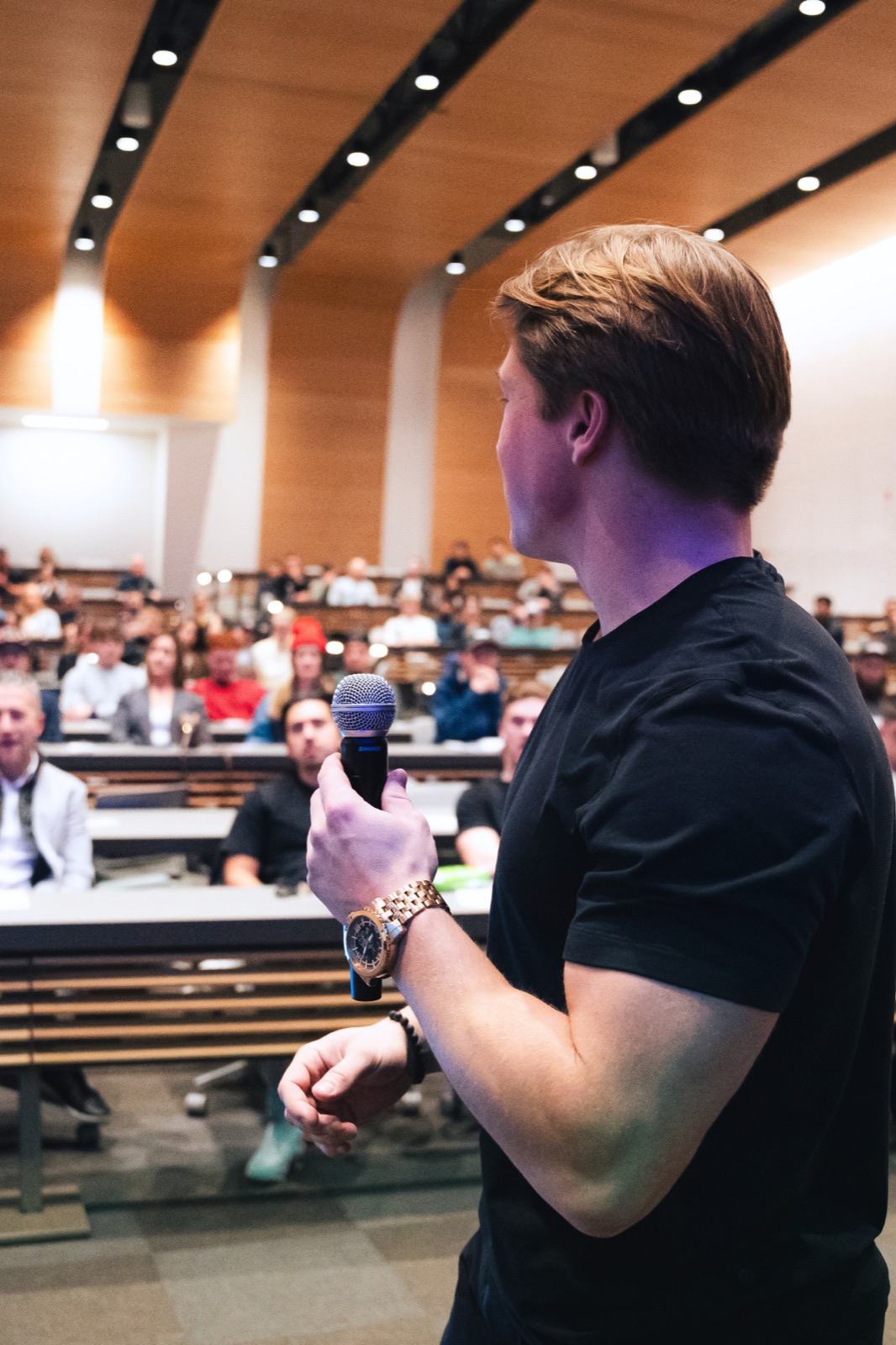
Run build in public (#buildinpublic on LinkedIn and X) as your secondary channel; it compounds slowly but attracts inbound interest and accountability. And set expectations: without an existing audience, 1–6 months to 10 paying customers is normal. In the Okanagan, shortcut it in person — the founders, investors, and operators at Kelowna Founders Club events are exactly the room where a live demo turns into your first three customers.
What to measure in the first 90 days
60–70% of SaaS churn is decided in the first 90 days, and early churn is almost always an onboarding and activation problem, not a product problem. So instrument the basics before launch day: PostHog, Amplitude, or Mixpanel, tracking roughly six events maximum: sign-up, activation, main feature use, retention, trial start, payment intent. More than that and you'll drown in dashboards instead of talking to users.
The numbers that matter:
- Activation rate — target 20–40% of sign-ups completing the core workflow
- Day-7 and day-30 retention
- Monthly churn — keep it under 5%
- CAC and MRR growth
The single strongest lever is time-to-first-value: users who activate within 3 days are about 90% more likely to keep using the product, and ideally the aha moment lands within two minutes of the first session. If your activation number is soft, fix onboarding before you build feature four.
Kill, pivot, or double down: reading the signals
Ninety days in, you need a decision framework, not vibes. One useful set of thresholds (from SaaS Factor — a framework, not gospel):
- Day-90 retention: below 15% → pivot; above 30% → persevere
- Activation: below 12% → pivot; above 25% → persevere
- MRR growth: below 5%/month → pivot; above 12% → persevere
- CAC payback: over 18 months → pivot; under 12 → persevere
The trigger is 3+ metrics underperforming simultaneously across 90 days — one bad number is a fix, three is a verdict. Qualitatively, pivot when 70%+ of churned customers cite the same core objection.
Then apply the pull-versus-push test. Users returning unprompted, using the product in ways you didn't design, complaining when it's down? That's pull — double down. If every ounce of usage is you convincing, reminding, and chasing, that's push — question the whole premise, hard. The beauty of the AI-built MVP is that killing one costs you weeks, not years. That's the real reason to learn how to launch a SaaS MVP this way: cheap experiments make honest decisions possible.
Key takeaways
- Validate before you build: 5–10% landing-page CTA clicks and 1–3% waitlist pre-sale conversion are the benchmarks that matter.
- Ship one end-to-end workflow — auth, core job, essential output. Nothing else in v1.
- With AI tools, a simple SaaS takes 3–4 weeks and under $100/month — prototype in Lovable/Bolt, rebuild in Cursor or Claude Code, and spend a day of the saved time on a security review.
- Canadians can take Stripe payments as a sole proprietor — no incorporation, no Stripe Atlas.
- Price on value, not build cost — a $99 early customer beats a $49 one.
- First 10 customers come from direct outreach, not launches — 80% of sales close after the fifth touch.
- Decide at day 90 with real thresholds: retention, activation, MRR growth, CAC payback.
Frequently asked questions
How long does it take to build an MVP with AI?
As of mid-2026, a simple SaaS MVP takes about 3–4 weeks with AI tools, a no-code build 3–5 weeks, and a complex product 6–12 weeks. The same scope through an agency team typically runs 4–6 months. Solo, AI-assisted builds compress the calendar by roughly 5x.
Can a non-technical founder build a SaaS?
Yes — around 63% of AI app builder users have no coding background. Your job shifts from writing code to defining the problem precisely and writing sharp prompts. Start with our guide to building an app with AI and no coding.
How much does it cost to build a SaaS MVP in Canada?
Solo with AI tools, expect $0–$100/month in subscriptions (an AI coding tool at ~$20 plus Supabase at $0–$25 plus free hosting) versus $15K–$80K for an agency build. Keep total spend under $500/month until you pass $20K MRR. If your product involves genuine technological uncertainty, Canada's SR&ED program offers a 35% refundable credit on qualifying development.
What's the cheapest way to build an MVP?
Free tiers all the way down: Bolt or v0 free tier for prototyping, Supabase free tier (500MB database, 50K monthly auth users — beware the one-week auto-pause), and Vercel free hosting. Your only mandatory cost is roughly $20/month for a serious AI coding tool once you build for real.
How do I validate a SaaS idea before building?
Run a landing-page smoke test with a commitment CTA — 5–10% click-through is healthy, under 2% means rethink the value prop — and attempt pre-sales, where 1–3% of a waitlist converting to payment is a green light. Add 10 customer interviews. In the Okanagan, KFC events, Startup Grind Kelowna, and the Digital Okanagan meetup will fill your interview calendar in a week.
Do I need to incorporate before charging customers in Canada?
No. Stripe lets Canadians onboard as an individual or sole proprietorship, so you can accept your first payment the day your MVP works. Register for GST/HST once you pass the CRA's $30K revenue threshold over four consecutive quarters, and consider incorporating once revenue is real.
How do I get my first SaaS customers without an audience?
Direct outreach: list 50–100 people matching your ideal customer profile, message them personally about their specific pain, ask for 20 minutes, and offer paid early access. Follow up five-plus times over a month — most sales happen after the fifth touch. Expect 1–6 months to reach 10 paying customers.
Building something in the Okanagan? You don't have to figure this out alone — the room is full of people a few steps ahead of you, and a few steps behind. Join the Kelowna Founders Club free and pressure-test your MVP idea at the next event.
Kelowna Founders Club
Want the next play first?
Join free and get every guide, speaker insight, and event invite before anyone else. Built by founders in the Okanagan.
Join the club freeSee upcoming events