
How to Network as an Entrepreneur (Even as an Introvert)
Learn how to network as an entrepreneur — even as an introvert — with a give-first system, follow-up scripts, and a 90-day plan built for Kelowna founders.
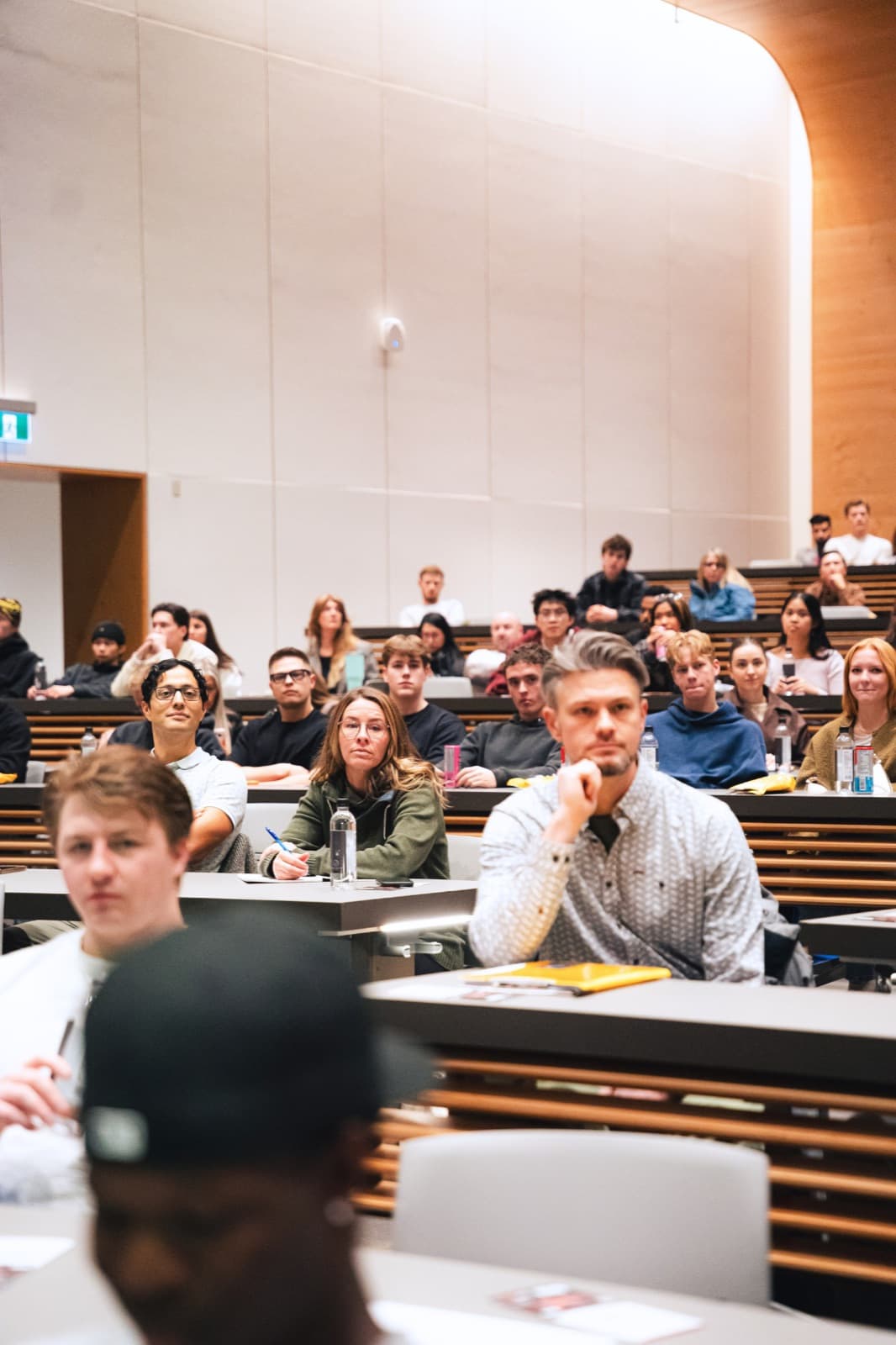
If the phrase "networking event" makes you want to stay home, you're in good company. Most advice on how to network as an entrepreneur assumes you love working a room — but the research says the best networkers are systematic, not loud. This guide gives you the full system: a give-first mindset that kills the ick, conversation starters that actually work, a 48-hour follow-up ritual, and a 90-day plan built for Kelowna and the Okanagan.
How to network as an entrepreneur: it's a system, not a personality trait
Between one-third and half of people are introverts, according to Susan Cain's research in Quiet. If networking required extroversion, half the economy would be locked out. It isn't — because networking is a repeatable system, not a charisma contest.
The "natural networker" myth doesn't even survive contact with the data. Adam Grant's study of 340 sales reps found an inverted-U between extraversion and revenue: ambiverts — people in the middle — outsold both strong extroverts and strong introverts, because they flex between talking and listening. The loudest person in the room is often the worst networker in it.
Structure matters more than personality, too. A five-year experiment on 20 million LinkedIn users — published in Science in 2022 — confirmed the "strength of weak ties" theory at scale: moderately weak ties (acquaintances with roughly ten mutual connections) transmitted the most job opportunities. Your close friends already know what you know. Acquaintances are where opportunities come from — and acquiring them is a system any introvert can run.
Introverts bring real advantages too: deep listening, genuine preparation, and one-on-one depth. So drop the idea that you need to become someone else. You need business networking skills — a process — and the rest of this guide is that process.
The give-first mindset that makes it not feel gross
That icky feeling when you network "strategically"? It's been measured. A 2014 study by Casciaro, Gino and Kouchaki found that instrumental professional networking literally makes people feel morally dirty. The same study found the fix: frame networking around what you can offer instead of what you can extract, and the dirty feeling disappears. And the lawyers in the study who networked more billed more hours — discomfort is optional; results aren't.
This is the core of give first networking. Adam Grant's Give and Take found that givers ultimately build the strongest networks: you can't predict who becomes valuable, so takers who filter for "important people" miss the future winners. One caveat — unconditional givers become doormats. Give first, but notice who never reciprocates, and quietly stop investing there.
"But I'm a broke early-stage founder — what do I have to give?" More than you think:
- An introduction between two people who should know each other (the single highest-value give)
- A relevant article, tool, or template tied to something they mentioned
- An invite to a good event they'd otherwise miss
- Honest, specific feedback on their product or pitch
- A testimonial or a genuine share/comment on their work
Givers also build pipeline, not just goodwill: 86% of B2B purchase decisions are influenced by peer word-of-mouth, and referred customers have roughly 59% higher lifetime value. If you're doing founder-led sales, your network is your top of funnel.
Before the event: goals, research, and one good question
Preparation is the introvert's superpower, and it's completely legitimate. Here's the pre-event checklist:
- Set an introvert-calibrated goal: 2–3 real conversations. Not 50 business cards. Depth beats volume, and a small goal you hit beats a big one you dread.
- Make a target list of 3–5 people or roles. Check the RSVP list, the speaker lineup, or the host's social posts. "I want to meet one person in SaaS, one investor, and the speaker" is a plan; "mingle" is not.
- Arrive early. The room is quieter, conversations are easier to start, and you'll be settled when the crowd arrives instead of walking into a wall of noise.
- Rehearse your answer to "tell me about yourself." Two sentences: what you do, and what's interesting about it right now. Practising this isn't cheating — it's craft.
- Prep one great question. One question you're genuinely curious about carries you through every conversation of the night.
In Kelowna this prep is even easier, because the scene is small enough to research. Before a Kelowna Founders Club night, skim the events page for the speaker and topic — showing up with one informed question about the talk is the easiest conversation starter in the building.
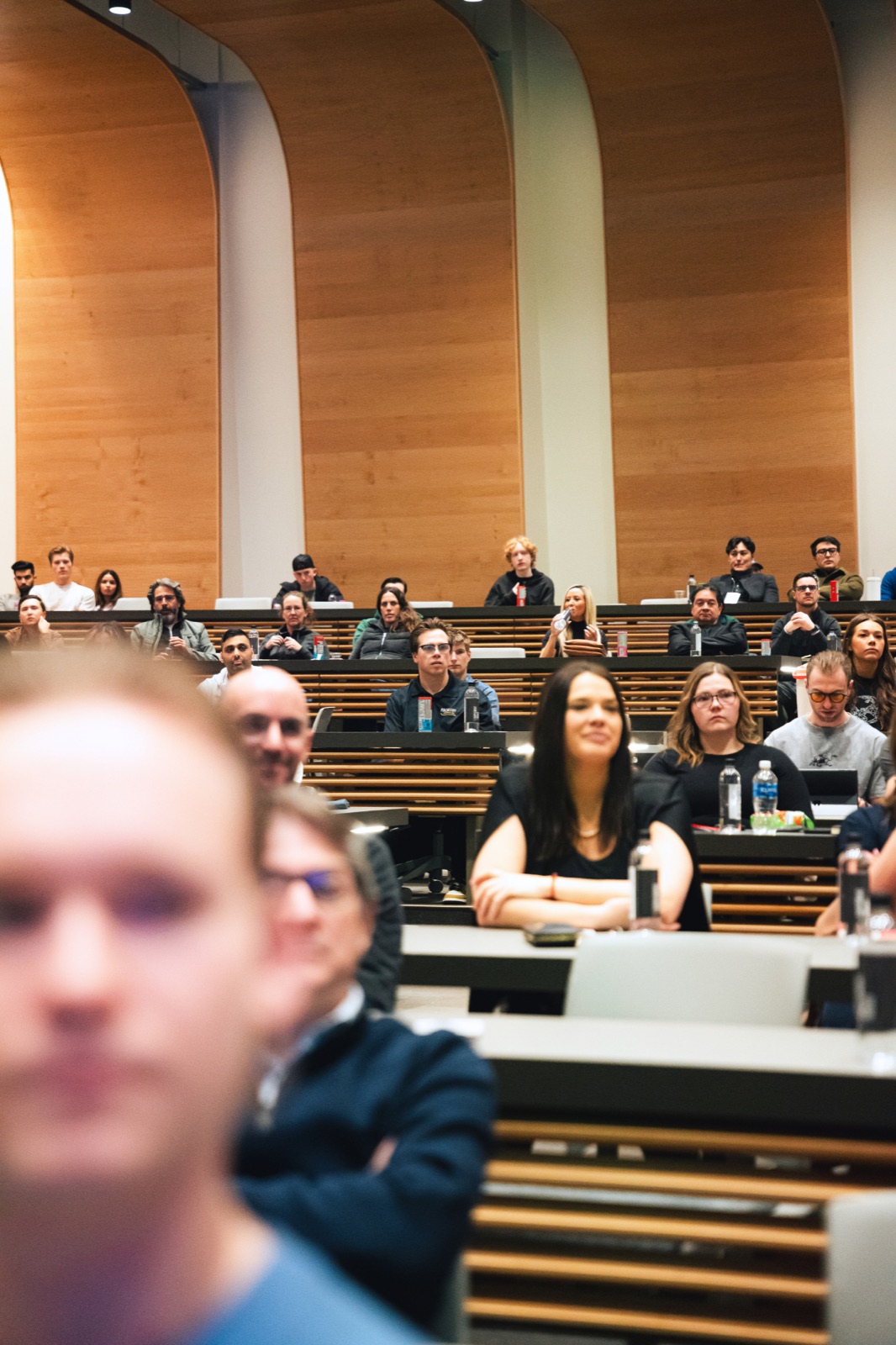
At the event: conversations that go deeper than "what do you do?"
"So, what do you do?" turns every conversation into a title-swapping ritual. Research on conversation openers consistently shows that self-disclosure questions build trust faster than status questions. Keep these networking conversation starters in your back pocket:
- "What's the most interesting thing you're working on right now?"
- "What brought you here tonight?"
- "What are you hoping to get out of this event?"
- "What's something you're excited about outside work?"
Notice these all invite a story, not a job title. Then do the introvert thing you're already great at: actually listen, and ask a follow-up about their answer.
Three more in-room tactics:
- Exit gracefully, then multiply. "It was great meeting you — before I go, who else here should I meet?" is the highest-leverage sentence in networking. It ends the conversation politely and gets you a warm introduction, which is far easier than a cold approach.
- Take notes immediately. Thirty seconds on your phone after each conversation: name, company, what they care about, anything you promised. This powers the follow-up system below.
- Leave when you're depleted. Two great conversations and an early exit beats four hours of drained small talk.
One of the biggest networking mistakes to avoid: pitching. You're building a relationship, not closing a deal in a crowded room. If they're a genuine prospect, that's what the follow-up coffee is for — and your pricing conversation will go far better with trust built first.
The follow-up system: 48 hours, then forever
Here's the uncomfortable truth: the event is maybe 20% of networking. Follow-up is the other 80% — and it's where introverts, working calmly from a keyboard, win.
If you're wondering how to follow up after a networking event, the timeline matters more than the wording:
- Within 24–48 hours, send a short message referencing something specific from your conversation. Follow-ups in this window that mention the actual conversation see reply rates around 20–35%; late, generic ones drop below 15%. Even one personalized sentence roughly triples responses.
- Deliver the give. If you promised an intro, article, or feedback — send it in that first message. You instantly become the rare person who follows through.
- Suggest a low-stakes next step only if it's warranted: a 20-minute coffee, not a "synergies call."
A template that works: "Hey Priya — great meeting you at the Founders Club night. You mentioned you're wrestling with churn; this piece on retention for small businesses covers exactly the playbook we discussed. Would love to grab a coffee downtown sometime."
Then comes "forever" — the part almost nobody does:
- Run a simple relationship CRM. A spreadsheet or notes app is fine: name, where you met, what they care about, the give you promised, next touch date. Review it every Friday for ten minutes.
- Revive 2–3 dormant ties every month. Research in Organization Science found that reconnecting with dormant ties delivered advice as valuable as current contacts — dormant strong ties are the best of both worlds, combining the trust of an old friend with the fresh information of a new acquaintance. "Saw this and thought of you" is a complete message.
This is the heart of building business relationships: not more events, but more consistent touches after them.
Building your personal board of advisors
As your network grows, deliberately shape part of it into a personal board of advisors — 4–6 people you talk to regularly who make you better. Research summarized by MIT Sloan Management Review suggests professionals with a strong advisory network are markedly more likely to hit their career goals — roughly 2.5x by their estimate. HBR's framework breaks the roles down like this:
| Role | Who they are | What they give you |
|---|---|---|
| Mentor | 5–10 years ahead of you | Pattern recognition, hard-won judgment |
| Industry expert | Deep in your market | Technical and market reality checks |
| Challenger | Thinks differently than you | Breaks your biases before the market does |
| Advocate/connector | Well-networked, respects you | Doors, intros, opportunities |
| Supporter | Knows you as a person | Perspective when it gets hard |
Two rules. First, diversity is the point — five people who agree with you is a fan club, not a board. Second, don't send anyone a formal "will you join my personal board?" message. Just start recurring conversations: a quarterly coffee, a monthly message, a standing walk.
In a city Kelowna's size, you can assemble most of a board within a year of showing up consistently. Speakers at local events — KFC has hosted everyone from a sales copywriter to a content creator with 8.8 million followers — are exactly the "mentor" and "industry expert" candidates people assume they need a big city to find.
How to network as an entrepreneur online: LinkedIn without the spam
Online networking follows the same rules: give first, personalize, follow up. A few LinkedIn networking tips grounded in current benchmarks:
- Target properly. A healthy B2B connection acceptance rate in 2026 is 30–45%. If you're below 20%, your targeting is off or you're over-automating — and LinkedIn will throttle your account for it.
- The note matters less than you think — until after acceptance. Across 20M+ requests, adding a note barely moved acceptance rates, but it nearly doubled the reply rate after acceptance. Send the note for the conversation, not the connection.
- Keep notes short and specific. 120–180 characters outperforms maxed-out 300-character essays. Referencing a recent post, funding round, or role change pushes acceptance to 50–60%.
- Comment first, pitch never (at first). Cold DMs are overwhelmingly ignored; thoughtful comments on someone's posts for two weeks make your eventual message warm.
The same logic applies to online communities: show up, answer questions, share what you're learning. Six months of genuine participation beats any outreach sequence — online or off, give first networking is the strategy.
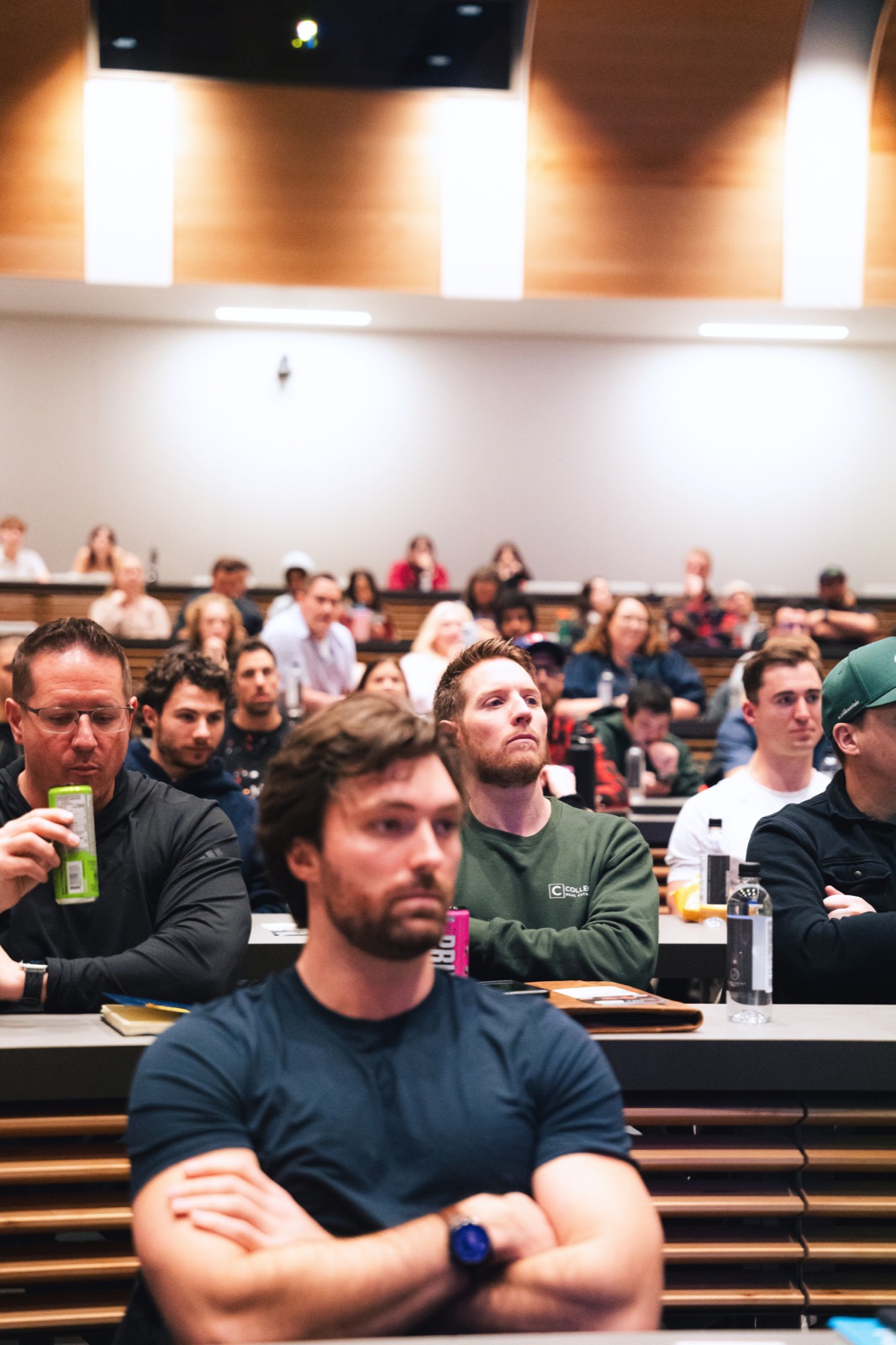
Your 90-day networking plan in Kelowna and beyond
Wondering how to network in a new city — or how to finally do it properly in the one you live in? Kelowna is arguably the best-case scenario. The Central Okanagan has over 17,000 licensed businesses and nearly 800 tech companies, but the active networking scene is a few hundred people who show up repeatedly. That's the small-city advantage: your reputation compounds in months, not years, because the same faces keep seeing you give first.
Here's a realistic 90-day plan — one event per week-ish, a couple of coffees a month, and relentless follow-up:
Days 1–30: Show up and listen.
- Pick two recurring anchors. Join the Kelowna Founders Club (it's free, with regular speaker events) and add one more: Accelerate Okanagan's recurring Startup Drinks at the Innovation Centre, the Okanagan Business Network's roundtables on Meetup, or a Downtown Kelowna After 5 social.
- Goal per event: 2–3 real conversations, notes after each, follow-up within 48 hours.
- Start your relationship spreadsheet from day one.
Days 31–60: Go one layer deeper.
- Book 2–3 coffee chats from your first-month connections.
- Make your first three introductions between people you've met — the fastest reputation-builder there is.
- Add one adjacent room: a Kelowna Chamber of Commerce event, a Commerce ConneX after-hours, or a BNI visit if referrals drive your business.
Days 61–90: Become a connector.
- Keep the weekly event rhythm, but now walk in with a target list and walk out having introduced others.
- Revive 2–3 dormant ties from before the 90 days started.
- Identify your first two personal-board candidates and put a recurring coffee in the calendar.
- If you're fundraising-curious, get events like the Okanagan Angel Summit and the rooftop Founder & Investor Social on your radar — Vernon, Penticton, and West Kelowna founders make the drive for these, and so should you.
Ninety days of this and you won't be "doing networking" anymore. You'll just know people — which 78% of entrepreneurs, per HBS Online, call a deciding factor in startup success.
Key takeaways
- Networking is a system, not a personality trait — ambiverts outsell extroverts, and introvert strengths (listening, prep, depth) are advantages.
- Weak ties carry the opportunities. A 20-million-user study confirmed acquaintances, not close friends, transmit the most opportunities.
- Give first and the ick disappears — framing networking around what you can offer removes the studied "dirty" feeling and builds the strongest network long-term.
- Set introvert-calibrated goals: 2–3 real conversations, arrive early, one great question.
- Follow up within 24–48 hours with one specific, personal sentence — then revive 2–3 dormant ties monthly, forever.
- Build a personal board of advisors: 4–6 deliberately diverse people, recurring conversations, no formal ask.
- Small cities compound faster. In Kelowna's tight Okanagan network, 90 consistent days buys a reputation that takes years in Toronto or Vancouver.
Frequently asked questions
How do introverts network without being fake?
Stop performing extroversion and lean into preparation: a small conversation goal, a researched target list, one genuine question. The "gross" feeling vanishes when you frame networking around what you can offer — and introverts' listening and one-on-one depth are advantages, not handicaps.
What should you say instead of "what do you do?"
Ask questions that invite a story: "What's the most interesting thing you're working on right now?", "What brought you here tonight?", or "What are you excited about outside work?" Self-disclosure questions build trust faster than title-swapping and make the conversation memorable enough to reference in your follow-up.
How soon should you follow up after a networking event?
Within 24–48 hours — that's the golden window. Personalized follow-ups in that window see roughly 20–35% reply rates, while response rates drop about 50% past 48–72 hours. One specific sentence about what you discussed is enough.
How many people should be on a personal board of advisors?
Four to six, deliberately diverse: a mentor a few years ahead, an industry expert, a challenger who breaks your biases, a connector, and a supporter. Don't formally ask anyone to "join" — just start recurring conversations and keep them going.
Is networking dead in the AI era?
No — the old transactional version is. As AI floods inboxes with generic outreach, in-person relationships have become more valuable: 95% of professionals say face-to-face contact is essential for lasting business relationships, and in-person communities have grown steadily since 2022.
Where are the best networking events in Kelowna for entrepreneurs?
Start with Kelowna Founders Club's free speaker events, then layer in Accelerate Okanagan's Startup Drinks, the Okanagan Business Network meetups, Downtown Kelowna After 5, and Kelowna Chamber events. Pick two anchors and attend consistently — familiarity compounds fast in the Okanagan.
Do LinkedIn connection requests need a note?
A note barely changes whether people accept — but it nearly doubles the odds they reply afterwards, which is the part that matters. Keep it to 120–180 characters and reference something specific, like a recent post or role change.
Networking isn't a talent you were born without — it's a system you haven't run yet. The Okanagan's founder scene is small, generous, and easier to break into than any big city's. Start this week: join the Kelowna Founders Club free, show up to one event, and have two real conversations.
Kelowna Founders Club
Want the next play first?
Join free and get every guide, speaker insight, and event invite before anyone else. Built by founders in the Okanagan.
Join the club freeSee upcoming events