
How to Get Referrals: Turn Word of Mouth Into a Growth Engine
Learn how to get referrals on purpose: a word of mouth marketing system with scripts, incentive ideas, and a weekend referral program for small business.

Most Kelowna businesses grow by word of mouth — and almost none of them can explain how. If you want to learn how to get referrals on purpose instead of by accident, you need a system: a referable experience, a well-timed ask, a sensible incentive, and a way to track it all. This guide gives you exactly that, built for small and service businesses in the Okanagan, not for e-commerce giants.
Here's the tension the whole system exists to solve: surveys consistently find that around 83% of satisfied customers say they'd happily refer you — but only about 29% ever do. That gap isn't a loyalty problem. It's a systems problem. Let's close it.
Why word of mouth is your highest-converting channel
No ad will ever beat a friend saying "you have to call this person." Roughly 92% of people trust recommendations from friends and family over any form of advertising, and referral leads typically convert 3–5x better than paid traffic. For most established small businesses, 10–35% of new customers already arrive by referral — without anyone managing it.
Referred customers are also simply better customers:
- Wharton research pegs their lifetime value about 16% higher than non-referred customers
- They spend about 25% more on their first purchase
- They stick around: roughly 37% higher retention
And yet, per Jay Baer and Daniel Lemin's research in Talk Triggers, word of mouth directly drives about 19% of purchases and influences up to 90% — while fewer than 1% of companies have an actual word of mouth marketing strategy. That's the arbitrage.
The math hits harder here than almost anywhere. The Central Okanagan has roughly 17,299 licensed businesses in a metro of about 230,000 people, and the networks overlap constantly. In Kelowna, one delighted customer genuinely reaches a meaningful slice of your market — and so does one annoyed customer. Reputation compounds faster here than it ever could in Vancouver or Toronto.
Referable by design: the experience people can't not talk about
Before scripts and incentives, ask the uncomfortable question: is there anything about working with you that's worth mentioning at a barbecue?
People don't talk about competence. Competence is expected. People talk about differences — the one specific thing you do that nobody else does. Baer and Lemin call this a "talk trigger," and their framework says it must be four things: remarkable, relevant, reasonable, and repeatable. (Their Talk Triggers site breaks the framework down further.)
The canonical example: DoubleTree's warm chocolate-chip cookie at check-in — about 75,000 a day for over 30 years. Baer and Lemin found more than a third of guests mentioned the cookie to someone in the previous 30 days, roughly 25,500 people talking about the hotel daily at zero ad spend.
You don't need cookies. You need one repeatable, on-brand surprise:
- The plumber who texts a photo recap of the work with a plain-English explanation of what was fixed
- The accountant who sends a year-end one-pager titled "What we saved you this year"
- The landscaper who leaves a hand-drawn seasonal care map of the yard
- The consultant who ships a 90-day check-in nobody billed for
Pick one. Make it standard on every job. That's the raw material every referral conversation is built from — the sentence your customer says when your name comes up.

How to get referrals: the right moment and the right words
Most people ask for referrals at the wrong time (or never). The fix is to ask only at green-light moments — points where the customer is actively feeling the value:
- Right after you've solved a real problem or hit a milestone
- Immediately after an unprompted thank-you or compliment
- After a 9–10 response on an NPS survey ("how likely are you to recommend us?")
- Right after a 5-star review lands
Never ask mid-negotiation or while an issue is unresolved. And never ask before you've delivered value — as sales trainers put it, that's like asking someone to co-sign a loan on the first date.
The mechanics matter as much as the timing:
- Ask for one person, not "a few people." "Who do you know?" produces a shrug. "Who's one person dealing with [specific problem]?" produces a name.
- Be specific about who you help. "Who else do you know who's buying their first home in West Kelowna this year?" beats "know anyone who needs a mortgage?"
- Then be quiet. Let them actually think. The silence is the technique.
A non-pushy pattern that works in almost any service business: "I'm really glad you feel that way. Could you do me a small favour — who else do you know who might benefit from the same kind of help?" You're framing it as a favour between people who like each other, not a sales pitch. Jobber's guide to asking for referrals has good field-tested variations for trades and home services.
If asking still feels awkward, that's usually a confidence problem upstream — our founder-led sales playbook covers how to sell without feeling salesy, and it pairs naturally with this guide.
Referral incentives: what to offer (and when to offer nothing)
For most consumer businesses, incentives work: 74% of consumers say they're less likely to refer with no reward on the table. The evidence-backed rules for referral incentive ideas:
- Double-sided beats one-sided. Rewarding both the referrer and the new customer lifts participation by about 29%, and 78% of successful brands run double-sided programs.
- Tiered beats flat. Programs with escalating rewards generate roughly 27% more referrals than flat one-and-done rewards.
- Rewarding the friend can work as well as rewarding the referrer. A gift for the new customer feels generous; a commission for the referrer can feel transactional.
The famous referral program examples prove the model at scale: Dropbox's double-sided free-storage offer reportedly drove 3,900% growth, and Tesla's tiered program reportedly returned about 42x per dollar versus the 2–5x typical of paid ads. You're not Tesla, but the structure — small reward for a small action, big reward for a sale — scales down beautifully.
When to offer nothing. In high-trust professional services — legal, financial planning, B2B consulting — paying for referrals can cheapen the gesture or even create disclosure problems. If a client refers you because you're genuinely excellent, a cheque can make it weird. Better alternatives:
- Priority scheduling for referrers
- A handwritten thank-you card (radically underrated in 2026)
- A donation to a local charity in the referrer's name
- An invite to something exclusive — a client dinner, or a guest spot at one of our events
Also skip rewards, at least initially, if your margins are thin or your systems can't yet distinguish new customers from existing ones. And an incentive can't rescue mispriced work — if every job is barely profitable, fix that first with our guide on how to price your product or service.
Building a referral program for small business in a weekend
You do not need software to launch. Here's the minimum viable referral program for small business, buildable in a weekend:
- Saturday morning — pick the reward (or deliberately choose none, per above). Write it in one sentence.
- Saturday afternoon — write the ask. One email and one text version (see scripts below).
- Sunday morning — add "Who referred you?" to your intake — contact form, booking flow, or first call. This single field is 80% of referral tracking.
- Sunday afternoon — set your trigger. Pick the event that fires the ask: invoice paid, project delivered, or 5-star review received. Automate it if your tools allow; calendar-remind yourself if not.
- Sunday evening — open a spreadsheet. Columns: referrer, new customer, date, status, reward sent. Done.
When you outgrow the spreadsheet, the going rates in 2026 look like this:
| Tool | Pricing | Success fees |
|---|---|---|
| ReferralCandy | $39/mo (Grow: $79/mo) | 10.5% (Grow: 3.5%) |
| Referral Factory | $95–$1,000/mo flat | None |
| Google Sheets | Free | None |
Honest advice: under about 100 customers, you don't need referral software. The spreadsheet plus a real habit of asking will outperform a fancy tool nobody maintains.
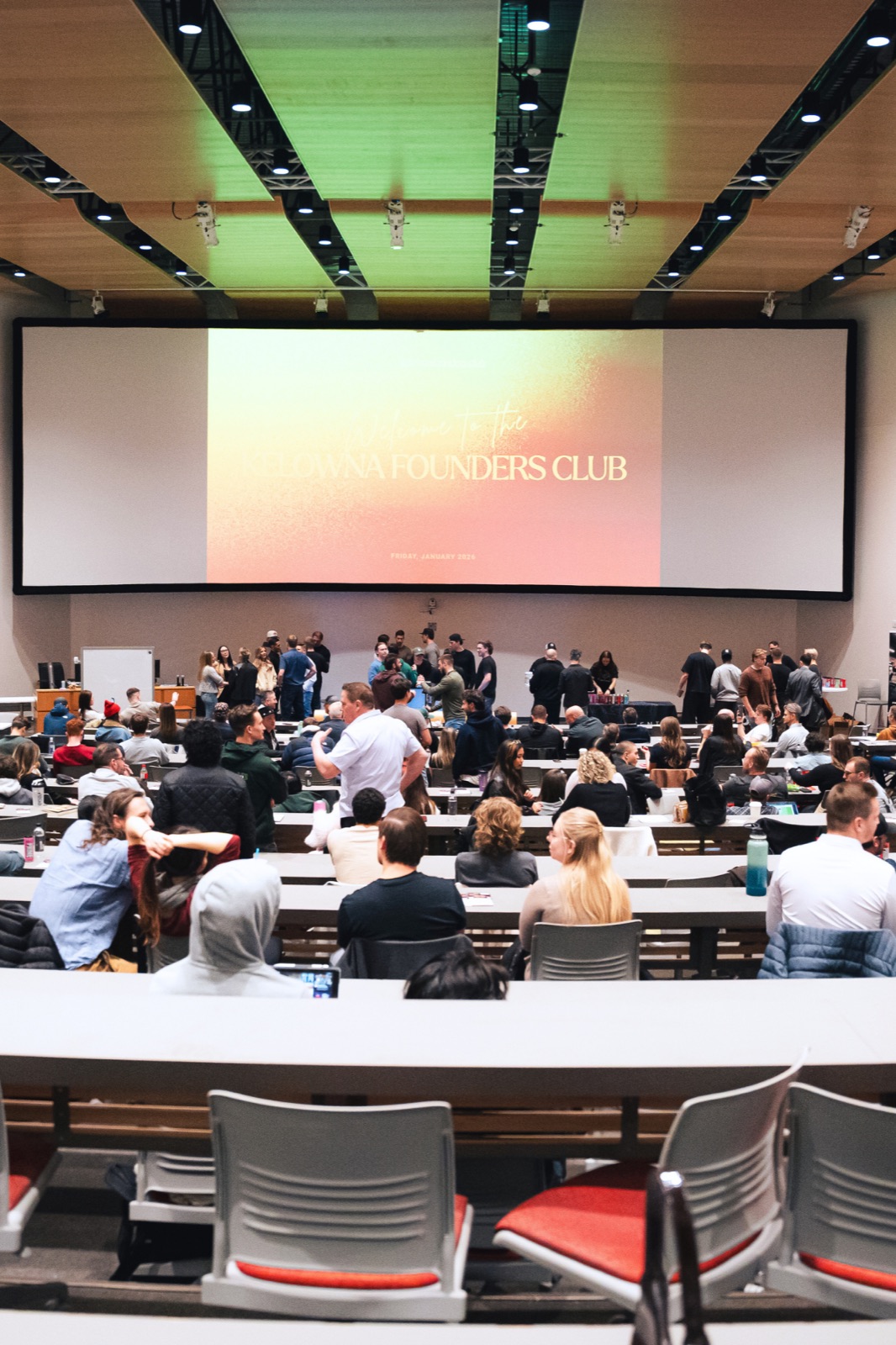
How to get referrals from partner businesses
Customer referrals arrive one at a time. Partner referrals arrive as a channel: find adjacent, non-competing businesses that share your customer, and trade introductions systematically.
The pattern is everywhere once you see it. In Kelowna specifically, natural pairings include:
- Mortgage broker ↔ realtor ↔ home inspector — same buyer, three sequential needs
- Winery-tour operator ↔ hotel concierge — every summer tourist needs both
- Landscaper ↔ pool company — same backyard, same season
- Bookkeeper ↔ Shopify agency — every growing e-commerce store needs both
To set one up: list five businesses your best customers also hire, take each owner for coffee, and propose something concrete — "I'll hand your card to every client who mentions X; do the same for me, and let's tell each other when a referral lands." Reciprocity plus a feedback loop is the whole deal.
There's formal infrastructure for this too. BNI — 340,000+ members worldwide, one member per industry per chapter, weekly meetings — exists purely to systematize partner referrals and has Okanagan chapters. The Kelowna Chamber of Commerce at 544 Harvey Ave runs a Sales Lead Network plus 2026 sales workshops.
The in-person data backs this up: 95% of professionals say face-to-face contact is essential for lasting business relationships, and more than 40% of in-person B2B meetings convert to customers. In a market Kelowna's size, being in the room is the strategy — our guide on how to network as an entrepreneur covers doing that without the awkwardness.
Tracking referrals without enterprise software
You can't improve what you can't see, and you don't need enterprise tooling to see it. The full system:
- Ask "who referred you?" at every signup, booking, or first call — no exceptions
- Log referrer, new customer, date, status (lead → customer), and reward issued
- Review the sheet weekly: thank new referrers, close loops, send rewards
- Once a quarter, count two numbers
Those two numbers:
- Referral rate = referred customers ÷ total customers. The global average is about 2.35%; around 2% is healthy for a small business, and higher-propensity industries like software run near 4.75%.
- Participation rate = customers who've referred at least once ÷ total customers. 12–15% is typical; above 25% is exceptional.
Don't benchmark yourself against Dropbox. Benchmark against your own last quarter.
The cheapest promoter-detector is a simple net promoter score question — "on a scale of 0–10, how likely are you to recommend us?" Anyone answering 9 or 10 should get the referral ask immediately, by email or text, while the enthusiasm is warm. Salesforce's NPS guide covers the mechanics; don't obsess over the score itself — use it as a routing system to turn customers into promoters you actually ask.
Scripts and templates: asks, thank-yous, and reminders
Steal these and edit the brackets.
The post-job ask (email or text):
"Hi [name] — glad the [project] turned out well! Quick favour: who's one person you know dealing with [specific problem you solve]? If you intro us by text or email, I'll take great care of them — and [reward, if any] is on me as a thank-you."
The NPS follow-up (after a 9–10):
"Thanks for the 10/10 — that made our week. Since we're clearly a fit: who's one [type of person] in your circle who could use the same help? A one-line intro is plenty."
The thank-you (send within 24–48 hours of a referral landing):
"[Name], your referral of [new customer] just became a client — thank you. [Reward detail if applicable.] People like you are why we get to do this."
Closing the loop is the most-skipped step in referral marketing. Always tell the referrer what happened — even if the lead didn't convert. Referrers who hear nothing stop referring.
The quarterly reminder (light touch, to past clients):
"Hi [name] — hope [something specific] is going well. Most of our new clients come from referrals from people like you. If anyone you know is wrestling with [problem], we'd love the intro."
Set that as a recurring quarterly send and you've automated the hardest part: remembering to ask.
Key takeaways
- The advocacy gap is your opportunity: ~83% of happy customers say they'd refer; only ~29% do. A system — not luck — closes the gap.
- Referred customers convert 3–5x better, spend more, and show ~37% higher retention. It's your best channel; treat it like one.
- Build a talk trigger: one remarkable, repeatable difference in your customer experience that gives people a story to tell.
- Ask at green-light moments, for one specific person, then be silent.
- Double-sided, tiered rewards win for consumer businesses; high-trust professional services often do better with no incentive at all.
- Under ~100 customers, a spreadsheet plus "who referred you?" beats any software. A healthy referral rate is about 2%.
- In a market Kelowna's size, partner referrals and showing up in person compound faster than any ad budget.
Frequently asked questions
How do you politely ask for a referral without being pushy?
Frame it as a small favour, only at a green-light moment — right after a thank-you, a solved problem, or a great review. Ask for one specific person rather than a vague "anyone you know," then let them think. Specific and brief reads as confident, not pushy.
What is a good referral rate for a small business?
The global average referral rate is about 2.35% of customers arriving by referral, so around 2% is healthy for most small businesses. Higher-propensity industries like software see closer to 4–5%. Track participation too: 12–15% of customers referring at least once is typical, and above 25% is exceptional.
Should I pay customers for referrals?
Usually yes for consumer and e-commerce businesses — 74% of consumers say they're less likely to refer without a reward. Often no for high-trust professional services, where payment can cheapen the gesture or raise disclosure issues. The middle path: give a gift to the new customer, and thank the referrer personally.
When is the best time to ask for a referral?
Immediately after delivered value: a finished job, a milestone, an unprompted thank-you, a 5-star review, or a 9–10 NPS response. Never ask during a negotiation or while a problem is unresolved, and never before you've actually delivered results.
Do I need referral software to run a program?
Not until you're well past 100 customers or dealing with reward fraud at volume. A spreadsheet, a "who referred you?" intake question, and a consistent ask will outperform unused software. When you graduate, expect roughly $39–$95/month entry pricing from tools like ReferralCandy and Referral Factory.
How do partner referrals work for a local business?
Find non-competing businesses that share your customer — mortgage broker and realtor, landscaper and pool company — and agree to introduce clients both ways, reporting back when referrals land. In Kelowna, BNI chapters and the Chamber's Sales Lead Network formalize exactly this.
Why does word of mouth matter more in a small city like Kelowna?
Because networks overlap. With roughly 17,000 licensed businesses in a metro of ~230,000, the same people keep crossing paths, so one customer's story — good or bad — travels through a real share of your market. Reputation compounds faster in the Okanagan than in a big city.
Referrals aren't luck — they're the compounding return on a great experience, a well-timed ask, and a closed loop. Build the system this weekend, then come test it on a room full of Okanagan founders who love making introductions: join the Kelowna Founders Club free and get your next referral in person.
Kelowna Founders Club
Want the next play first?
Join free and get every guide, speaker insight, and event invite before anyone else. Built by founders in the Okanagan.
Join the club freeSee upcoming events